
James Corbin | Special Correspondent
In a bombshell revelation, leaked diplomatic notes from Ukraine have exposed Bangladesh as a key player in a shadowy Russian scheme to flood global markets with stolen Ukrainian grain, threatening to plunge the nation into a geopolitical firestorm! The confidential documents, obtained exclusively by this outlet, reveal that Bangladesh has already unloaded 30,000 tonnes of illicit grain from the vessel Pangeo (IMO: 9467873) at Chittagong port on April 1, 2025, with another massive shipment aboard the Berden (IMO: 9278818) barreling toward the same port, set to arrive June 11, 2025. Ukraine’s explosive warnings of international sanctions and war crime complicity have put Bangladesh’s government on the brink of a diplomatic disaster!
The leaked notes, dated March 25 and June 2, 2025, from the Ukrainian Embassy in India, accuse Russia of plundering grain from occupied Ukrainian ports in Berdiansk, Sevastopol, and Kerch, then funneling it through Russia’s Kavkaz seaport to unsuspecting buyers. The Pangeo shipment, now sitting in Bangladeshi storage, and the Berden’s 53,900-tonne cargo are branded as stolen goods, violating international law and fueling Russia’s war machine. Ukraine’s chilling warning: companies and even Bangladeshi officials could face crippling EU, US, and UK sanctions for handling this “blood grain”!
Pangeo and Berden: Rogue Ships in Russia’s Shadow Fleet
The vessels are no strangers to controversy, operating as cogs in Russia’s notorious “shadow fleet”—a clandestine network dodging Western sanctions with shady tactics. Pangeo, a Liberian-flagged Supramax (56,956 DWT, built 2009), was spotted skulking around occupied Crimean ports like Kerch and Komysh Burunska from February 19 to March 7, 2025, before slipping through Turkish waters and the Suez Canal to deliver its illicit haul to Chittagong. By June 1, it was lurking in Al Fujayrah, UAE, likely plotting its next move. Berden, a Marshall Islands-flagged carrier (55,557 DWT, built 2004), was last seen in the Arabian Sea on June 1, 2025, with armed guards onboard, a telltale sign of its high-stakes cargo. Both ships fly flags of convenience, masking their true operators and evading accountability.
Russia’s shadow fleet thrives on deception: disabling AIS trackers, falsifying destinations, and using transshipment hubs like Kavkaz to launder stolen goods. The EU and US have sanctioned over 100 such vessels since 2024, but Pangeo and Berden keep slipping through the cracks, exploiting ports in neutral countries like Bangladesh to bankroll Russia’s war.
Bangladesh’s High-Stakes Gamble
The leaked documents reveal Bangladesh’s dangerous dance with disaster. The 30,000 tonnes of Pangeo grain, now stashed in local warehouses, could trigger a sanctions tsunami, targeting businesses and potentially top officials in the Ministry of Food and port authorities. The June note warns that importing this grain “directly funds Russia’s aggression,” risking Bangladesh’s reputation as a global pariah. With Berden’s massive cargo looming, the government faces a ticking time bomb: let the ship dock, and Bangladesh could be blacklisted by Western powers; block it, and risk food shortages in a grain-hungry nation.
“This is a scandal of epic proportions,” thundered a Dhaka-based geopolitics expert. “Bangladesh is playing with fire, and these leaked notes prove it’s already burned!” Ukraine has dangled an olive branch, offering legal wheat supplies, but the government’s silence speaks volumes. Insiders whisper of internal chaos, with officials scrambling to dodge the fallout of Pangeo’s cargo while Berden steams closer.
The Mastermind and His Sordid History of Corruption
According to our sources within the government, the person sealing this controversial deal is none other than Sattar Mia, or Mia Sattar, a notorious figure whose shady dealings have sparked a global outcry! Sattar Mia is no stranger to controversy. He is known for illegally dealing grains, fertilizers, and even arms and weaponry, weaving a web of corruption that now threatens to sink Bangladesh into a geopolitical abyss.

Sattar Miah
Sattar Mia, chairman of National Electronic, and his brother Md. Amiruzzaman have a rap sheet that reads like a crime thriller. In 2015, Bangladesh’s government squandered Tk 1 billion ($12.5 million) buying 100,000 tonnes of wheat at Tk 28 per kg, Tk 8–10 above market rates. Sattar’s involvement as a grain-dealing kingpin implies that he benefited from this corrupt scheme, utilizing his political connections to enrich himself.
By 2022, Sattar’s National Electronic was at the heart of a scandalous 500,000-tonne wheat deal with Russia’s Prodintorg, brokered at $430 per tonne—$50–$130 above the global market price of $300–$380. This G2G deal, which cost Bangladesh Tk 2.4 billion ($25 million) in losses, violated the Public Procurement Act by involving Sattar as a third-party negotiator, flouting rules banning such interference.
Sattar’s corruption didn’t stop there. Between 2023 and 2024, he facilitated Prodintorg-funded trips to Russia for 17 Food Ministry and Directorate officials, who attended sham “food security seminars” while procuring 1.9 million tonnes of overpriced wheat. TIB branded these trips unethical and corrupt, opening “windows for corruption” by compromising officials’ neutrality. Sattar’s company also misrepresented its role in these deals, claiming advisory status while actively negotiating prices, further breaching transparency laws.
Rumors swirl of Sattar’s involvement in shadier ventures—fertilizer scams and arms trafficking—though evidence remains murky.
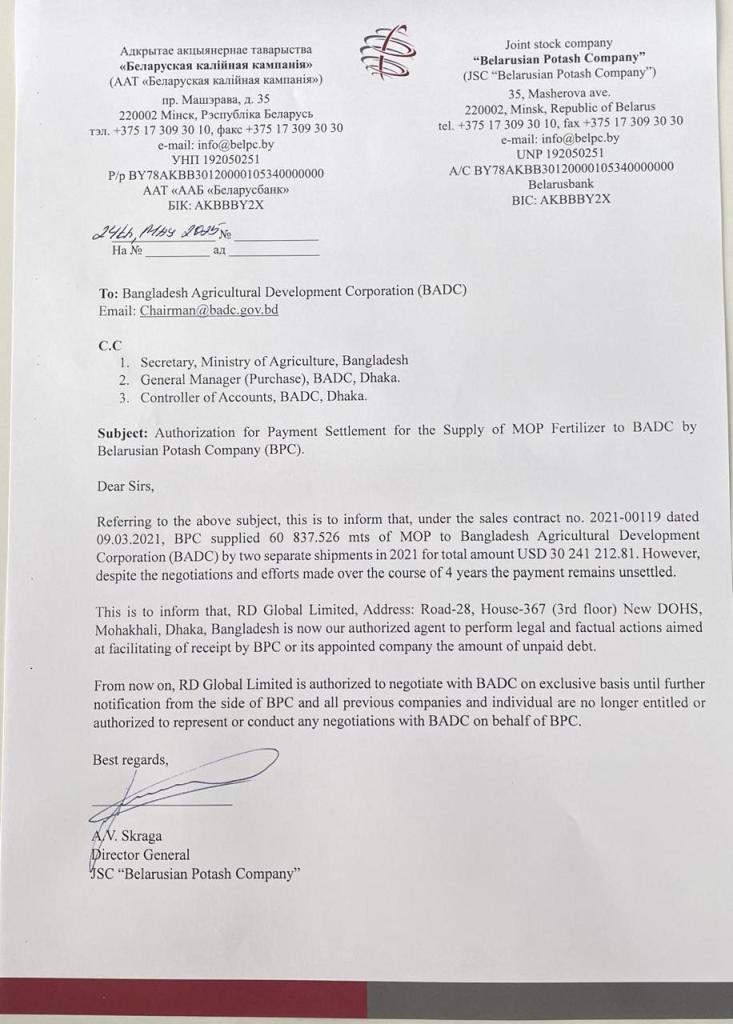
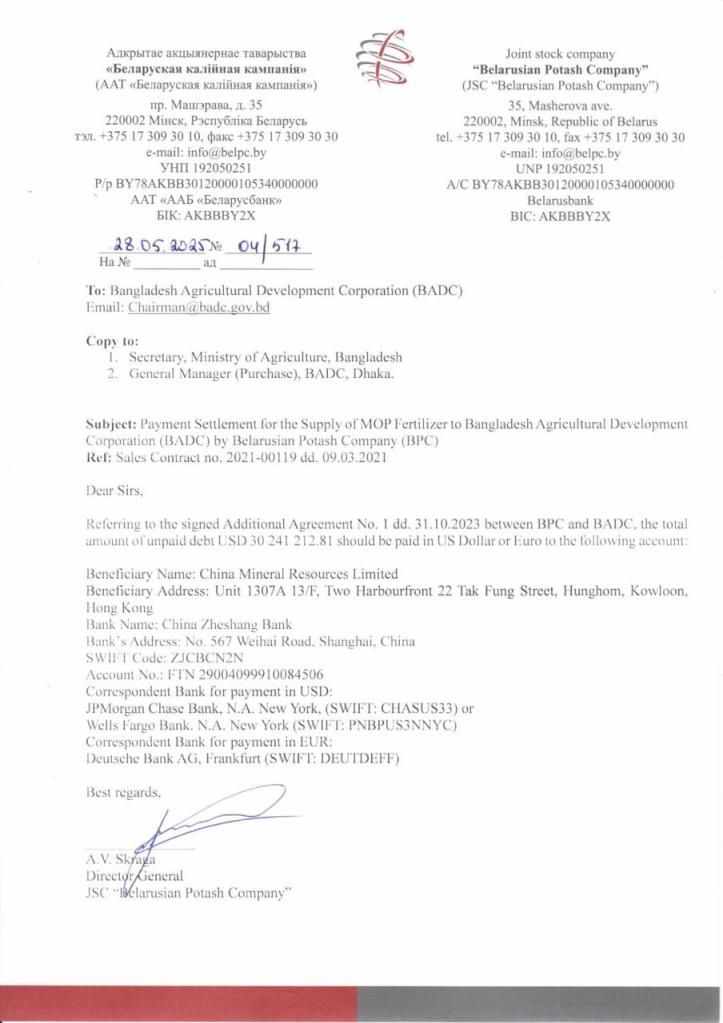
Despite deep ties to the previous government, Mia operates with audacious impunity under the interim regime, reportedly shielded by student coordinators and influential figures. One name resonates persistently: Lt. Gen. (Retd.) Jahangir Alam Chowdhury, Adviser for Agriculture and Home Affairs. Sources allege Chowdhury’s patronage enables Mia’s illicit ventures to flourish. Given Mia’s cozy relations with the prior regime, one might anticipate swift justice under a reformist government, yet the opposite unfolds. How Mia has ensnared the interim administration in his shadowy dealings remains shrouded in mystery, but whispers abound that Chowdhury’s influence casts a protective veil over this master of corruption.
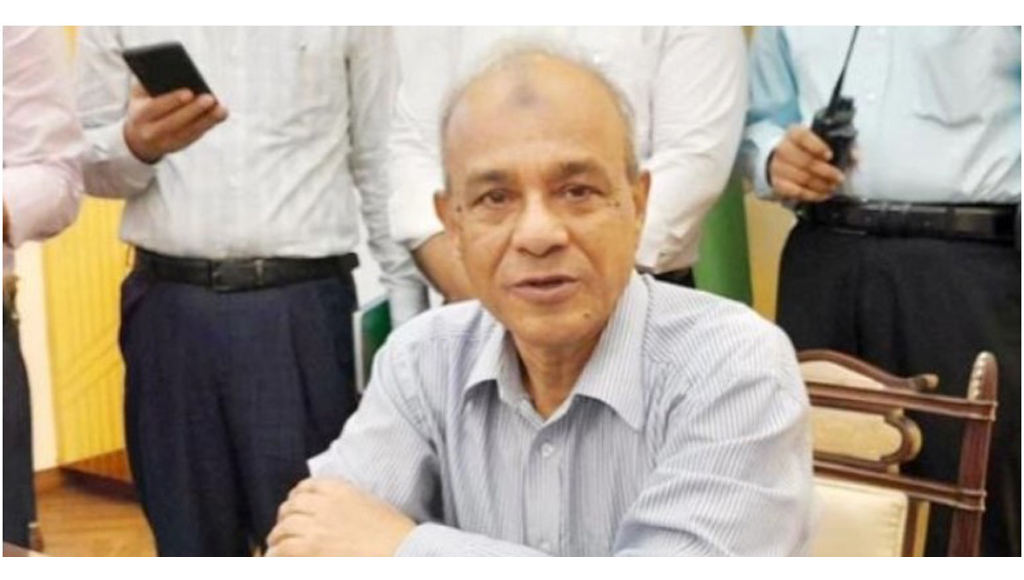
Lt Gen, retd, Md Jahangir Alam Chowdhury | UNB/ Collected photo
In conclusion, Sattar Mia’s audacious orchestration of illicit grain deals, unmasked by leaked Ukrainian diplomatic notes of March 25 and June 2, 2025, places Bangladesh on a perilous precipice. By facilitating the importation of 30,000 tonnes of stolen Ukrainian grain via the Pangeo and anticipating 53,900 tonnes from the Berden, Mia’s National Electronic BD Ltd. flouts international law, risking EU, US, and UK sanctions. His sordid history—profiting from a Tk 1 billion wheat scam in 2015, inflating prices in a $430-per-tonne deal in 2022, and enabling corrupt official trips to Russia in 2023–2024—paints a portrait of unchecked greed. Shielded by influential figures like Lt. Gen. (Retd.) Jahangir Alam Chowdhury in the interim government, Mia’s impunity defies expectations of justice, casting a dark shadow over Bangladesh’s integrity and threatening its global standing with dire economic and diplomatic consequences.


 The Asiapost News
Leave a comment