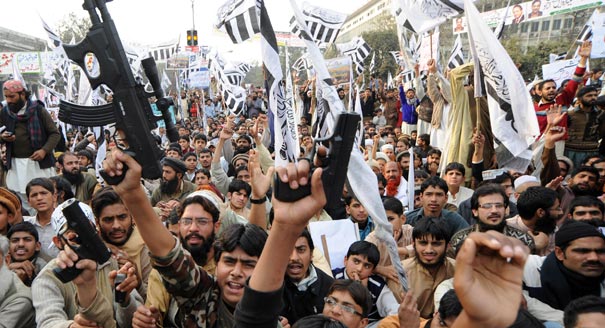
Dhaka, Bangladesh – A chilling claim by Muzammil Hazmi, a UN designated terrorist leader of the Pakistan-based terrorist group Lashkar-e-Taiba (LeT), has cast a dark shadow over the dramatic ouster of Bangladesh’s Prime Minister Sheikh Hasina in August 2024. In a fiery speech delivered in Gujranwala, Pakistan, on May 28, 2025, Hazmi boasted that LeT played a pivotal role in orchestrating the student-led uprising that toppled Hasina’s government, sending shockwaves through the region and raising urgent questions about foreign interference in Bangladesh’s volatile political landscape.
A Bold Claim Amid Regional Tensions
Hazmi’s provocative address, widely circulated on social media and reported by outlets like India.com, declared Lashkar’s triumph in “defeating” Hasina’s regime, a government long seen as a staunch ally of India. “We defeated you in Bangladesh last year,” Hazmi taunted, directly addressing Indian Prime Minister Narendra Modi. “If you come to the battlefield, we will come to the battlefield.” The speech, laced with threats of further retaliation, comes on the heels of India’s targeted strikes on LeT camps in Pakistan’s Muridke in May 2025, following a deadly attack in Pahalgam, India, attributed to LeT-linked operatives.
LeT, a UN-designated terrorist organization notorious for the 2008 Mumbai attacks, has long been a thorn in the side of regional stability. Its alleged involvement in Bangladesh’s 2024 uprising, which saw Hasina flee to India amid violent protests, suggests a brazen escalation of its ambitions.
The Fall of Hasina: A Grassroots Revolt or Foreign Plot?
The July Movement, as the 2024 uprising is known, erupted over opposition to a controversial government job quota system but quickly morphed into a broader rebellion against Hasina’s 15-year rule, marred by allegations of authoritarianism and corruption. The protests, led by students and fueled by economic discontent, culminated in Hasina’s ouster on August 5, 2024, after the military withdrew support. Allegedly 1,400 people died in the ensuing violence, according to UN estimates, marking one of Bangladesh’s bloodiest political transitions.
While the uprising appeared driven by domestic grievances, Hazmi’s claims point to a sinister undercurrent. LeT, with its history of exploiting regional fault lines, has maintained a foothold in Bangladesh since the early 2000s, leveraging the country’s Ahl-e-Hadith community and ties to local militant groups like Jamaat-ul-Mujahideen Bangladesh (JMB). In 2010, Bangladesh authorities dismantled an LeT cell involved in smuggling explosives and recruiting for jihadist operations. More recently, in May 2025, Indian police arrested two Pakistan-trained terrorists with suspected LeT ties near the Bangladesh border, underscoring the group’s active networks.
Lashkar’s Playbook in Bangladesh
Security analysts warn that Bangladesh’s porous borders and political instability make it a prime target for LeT’s operations. The group has used the country as a logistical hub for smuggling counterfeit currency, weapons, and bomb-making materials to fuel its anti-India campaigns, particularly in Kashmir. Its charitable front, Jamaat-ud-Dawa, has raised millions through religious networks, while LeT operatives have plotted attacks, including a foiled 2009 scheme targeting the U.S. and Indian embassies in Dhaka.
Hazmi’s claim that LeT orchestrated Hasina’s downfall aligns with concerns about the group’s growing audacity. Reports from April 2025, including one by Navbharat Times, suggest LeT is intensifying recruitment in Bangladesh, exploiting the power vacuum under the interim government led by Nobel laureate Muhammad Yunus. A particularly damning revelation came from The Economic Times, which reported a meeting between a Yunus government legal advisor and LeT operative Harun Izhar, fueling speculation of official complicity.
Islamist Surge and LeT’s Strategic Alignment
The rise of Islamist groups in Bangladesh since the 2024 coup has amplified fears of LeT’s growing influence. Groups like Hefazat-e-Islam and JMB, emboldened by the interim government’s perceived leniency, share LeT’s Salafi-jihadist ideology and anti-India agenda. These groups aim to establish an Islamic state in Bangladesh, mirroring LeT’s goal of imposing Muslim rule across the Indian subcontinent. A May 2025 arrest of three JMB operatives in West Bengal, suspected of LeT links, revealed plans to procure firearms and explosives for “Ghazwatul Hind,” a prophesied conquest of India, aligning directly with LeT’s objectives.
Pakistan’s diplomatic footprint in Bangladesh has also raised red flags. The Pakistani ambassador in Dhaka has been notably active in 2025, more so than in the past 53 years, engaging with local Islamist networks under the guise of humanitarian initiatives. Reports suggest Pakistan’s Inter-Services Intelligence (ISI) has funneled support to LeT and JMB through the Al Khidmat Foundation, a suspected ISI front involved in Rohingya relief efforts. This “humanitarian corridor” in Chittagong, ostensibly for aiding Rohingya refugees, has been flagged as a cover for recruiting and radicalizing vulnerable populations, with LeT operatives allegedly embedded in these operations. In 2019, Bangladesh accused Pakistan of similar interference via Al Khidmat, a pattern now intensifying.
LeT’s collaboration with local Islamists is further evidenced by a 2004 report noting its ties with Harkat-ul-Jihad-al-Islami Bangladesh (HuJI-B), which aimed to transform Bangladesh into an Islamic state. The group’s recruitment of 15,000 members from Bangladeshi and Pakistani madrassas at its peak underscores its long-standing presence. The Yunus government’s failure to curb these activities, coupled with allegations of diplomatic officials like Mazhar Khan financing JMB, points to a coordinated effort to destabilize Bangladesh and target India. LeT’s propaganda, amplified by Hazmi’s speech, seeks to exploit this chaos, positioning the group as a key player in Bangladesh’s Islamist surge.
India, already grappling with LeT’s cross-border terrorism, views these developments with alarm. Hasina, now in exile in New Delhi, has accused the Yunus government of aligning with foreign powers, including the U.S., and ceding strategic assets like St. Martin’s Island. Hazmi’s speech, coupled with LeT’s reported activities, reinforces India’s concerns about a Pakistan-backed campaign to destabilize the region.
The Road Ahead
As Bangladesh navigates its fragile transition under Yunus, the specter of LeT’s involvement demands urgent action. The interim government, criticized for delaying elections and banning Hasina’s Awami League, must crack down on extremist networks to restore stability and credibility. India, meanwhile, is likely to bolster its counterterrorism efforts, particularly along the Bangladesh border, to thwart LeT’s ambitions.
For now, Hazmi’s claims remain unverified, but they serve as a stark reminder of LeT’s enduring threat. Whether through propaganda or active interference, the group’s shadow over Bangladesh’s uprising signals a dangerous new chapter in South Asia’s security landscape. Regional powers and the international community must remain vigilant to prevent LeT from turning Bangladesh into a launchpad for chaos.




 The Asiapost News
Leave a comment