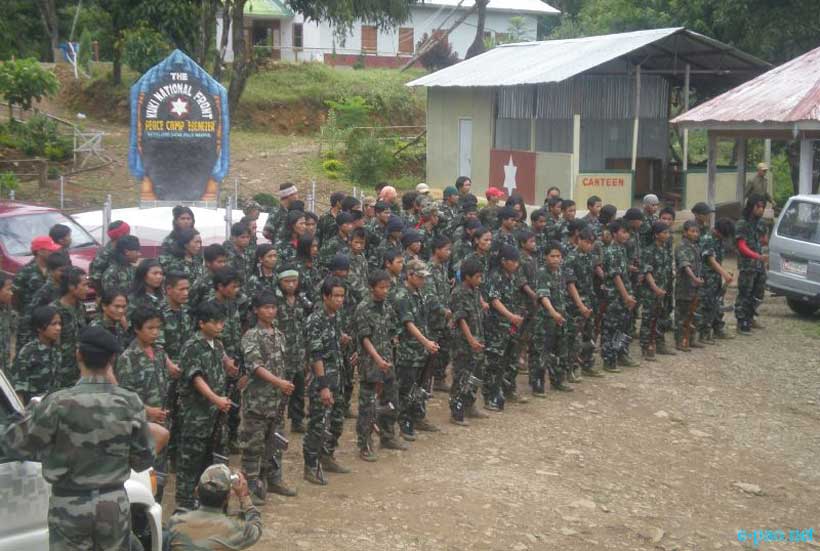
Chattogram, Bangladesh – On the night of May 17-18, 2025, Bangladesh police, acting on a military intelligence tip-off, seized 20,300 uniforms from Ringvo Apparels, a garment factory in Chattogram’s Bayezid Bostami area, intended for the Kuki-Chin National Front (KNF), a banned ethno-nationalist militant group. The raid led to the arrest of three individuals: factory owner Sahedul Islam, order placer Golam Azam, and Niyaz Haider, allegedly acting on behalf of a local KNF commander, Monghlasin Marma alias Mong. A case was filed under the Anti-Terrorism Act on May 18, with details emerging publicly on May 25. Valued at Tk 2 crore (approximately $20 million), the uniforms were part of a contract finalized in March 2025, raising questions about the KNF’s operational scale and potential regional connections, including to the Rohingya crisis, the Arakan Rohingya Salvation Army (ARSA), and a proposed “humanitarian corridor” in Myanmar’s Rakhine State.
KNF Background and Ambitions
Founded in 2017 by Nathan Bom, a Fine Arts graduate from Dhaka University, the KNF seeks an autonomous or independent state for the Kuki-Chin ethnic groups—Bawm, Pangkhua, Lusai, Khumi, Mro, and Khiang—across nine subdistricts in Bangladesh’s Chittagong Hill Tracts (CHT). Its armed wing, the Kuki-Chin National Army (KNA), has been linked to violent acts, including the killing of two Bangladesh Army soldiers in May 2023 and bank robberies in April 2024, including the abduction of a bank manager. With an estimated 1,000 to 1,500 fighters, the KNF has ties to Myanmar’s People’s Defence Force (PDF) and has reportedly received weapons from Kachin State, fueling concerns about its cross-border activities in Myanmar’s Chin State and India’s Manipur and Mizoram.
The Uniform Seizure: A Numbers Puzzle
The seizure of 20,300 uniforms has sparked debate about the KNF’s true strength. Assuming each fighter requires three uniforms (one for active use, one for training, and a spare), the haul could theoretically outfit approximately 6,766 fighters—far exceeding the reported 1,000–1,500 members. This discrepancy suggests several possibilities:
- Larger Membership: The KNF may have a significantly larger force than estimated, potentially 6,000–7,000 fighters, including unreported recruits or reservists from the 12,000-strong Kuki-Chin community in Bangladesh.
- Regional Alliances: The uniforms could be intended for allied groups, such as Myanmar’s PDF or, less likely, the Arakan Army (AA), which has 30,000 fighters. While no direct evidence links the KNF to these groups for this seizure, their shared regional interests suggest possible collaboration.
- Smuggling or Profit: The $20 million order could indicate a smuggling operation to Myanmar’s Chin State or India’s Northeast, where Kuki-Chin ethnic groups reside, or a scheme to fund operations through resale.
- Stockpiling for Escalation: The KNF might be preparing for a major offensive, stockpiling uniforms for future recruits or prolonged conflict in the CHT.
Potential Connections to Rohingya, ARSA, and the Humanitarian Corridor
The KNF’s activities occur in a volatile region near Myanmar’s Rakhine State, home to the persecuted Rohingya minority and the ARSA, a Rohingya militant group. While no direct evidence ties the KNF’s uniform seizure to the Rohingya or ARSA, several factors suggest possible connections:
- Geographical Proximity: The CHT borders Rakhine State, where over 1 million Rohingya refugees live in camps in Bangladesh’s Cox’s Bazar, 150–200 km from Chattogram. The KNF’s cross-border ties with Myanmar’s PDF and reported training of Islamist groups like Jama’atul Ansar Fil Hindal Sharqiya (JAFHS) in 2022–2023 raise questions about broader militant networks. ARSA, active in Rakhine, could theoretically benefit from regional arms or logistics networks involving the KNF.
- ARSA’s Activities: ARSA, responsible for attacks on Myanmar security forces in 2017, has been weakened but remains active in Rakhine. The uniforms could, in theory, be part of a supply chain to ARSA or similar groups, especially if the KNF is acting as a conduit for regional insurgents. However, ARSA’s distinct ethnic and ideological goals (Rohingya Muslim rights vs. KNF’s Christian-majority ethnic separatism) make direct collaboration unlikely without external coordination.
- Humanitarian Corridor: In 2024–2025, discussions about a “humanitarian corridor” in Rakhine State emerged to deliver aid to Rohingya and other displaced groups amid Myanmar’s civil war. The Arakan Army, which controls parts of Rakhine, has been involved in these talks. Speculation on social media suggests the KNF’s uniforms could be linked to groups exploiting such corridors for smuggling arms or supplies, given the CHT’s proximity and the KNF’s cross-border ties. However, no evidence confirms the uniforms were intended for Rakhine or a corridor-related operation.
- Security Concerns: Bangladesh’s security forces have noted the KNF’s history of training JAFHS, which has Rohingya recruits, suggesting indirect ties to Rohingya militancy. The uniforms’ scale could indicate a broader regional strategy, possibly involving Rohingya-linked groups, though this remains speculative.
Regional Security Implications
The Bangladesh Army has called the seizure a “serious matter,” with ongoing investigations into the uniforms’ purpose and the KNF’s financing. The group’s actions have displaced over 4,000 Bawm community members in the CHT since 2024, with some fleeing to Mizoram, India. India, already grappling with ethnic violence in Manipur involving Kuki communities, views the KNF’s activities as a growing threat. Analysts and netizens have speculated about foreign backing, including Chinese or regional insurgent support, but no credible evidence supports these claims.
The uniforms’ quantity challenges assumptions about the KNF’s scale and ambitions. A security analyst in Dhaka noted, “The numbers don’t add up for a group of 1,500 fighters. This could point to a larger force or a complex regional network.” The potential involvement of Rohingya-linked groups like ARSA or exploitation of initiatives like the humanitarian corridor adds urgency to the investigation. As Bangladesh intensifies its crackdown on the KNF, the seizure underscores the CHT’s role as a flashpoint in a region already strained by ethnic conflicts and refugee crises.


 The Asiapost News
Leave a comment