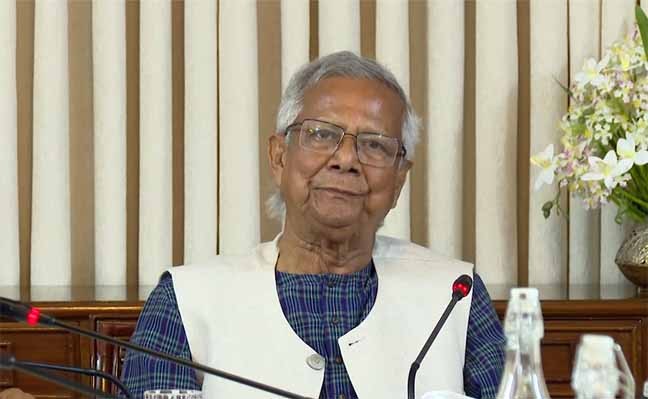
Dhaka, Bangladesh – May 23, 2025 – Nobel laureate Dr. Muhammad Yunus, Bangladesh’s interim Chief Adviser, is set to hold critical meetings with the Bangladesh Nationalist Party (BNP) and Jamaat-e-Islami on Saturday, amid swirling rumors of his potential resignation. The meetings, scheduled at the state guesthouse Jamuna, come as the country teeters on the edge of political and economic collapse, with Yunus’s leadership increasingly under fire for a series of missteps that have plunged Bangladesh into chaos.
A Nation on the Brink
Since assuming the role of Chief Adviser on August 8, 2024, following the ouster of Prime Minister Sheikh Hasina, Yunus was tasked with steering Bangladesh through a turbulent transition. However, his tenure has been marred by political infighting, economic stagnation, and a failure to unify a deeply divided nation. Sources close to the interim government revealed to The Asiapost News that Yunus has expressed frustration, reportedly telling allies he feels “held hostage” by the political climate. Nahid Islam, a key figure in the National Citizen Party (NCP), confirmed to BBC Bangla that Yunus is seriously considering stepping down, unable to navigate the quagmire he has helped create.
Bangladesh, once hailed as an economic success story, now faces rampant protests, a faltering economy, and rising violence against minorities. The interim government’s inability to deliver on promised reforms has left the nation on the verge of destruction, with analysts warning of a potential slide into anarchy if leadership fails to act decisively.
Yunus’s Catalog of Errors
Yunus’s leadership has been riddled with mistakes that have exacerbated the crisis:
- Failure to Unify Political Factions: Yunus’s inability to broker consensus between major political players like BNP and Jamaat-e-Islami has deepened divisions. His planned meetings on Saturday—one with BNP in the afternoon and another with Jamaat at 8 PM—are seen as a desperate, last-ditch effort to salvage his credibility. Sources from Jamaat indicate they sought the meeting to address the “ongoing chaos,” while BNP’s demands for the resignation of key advisers signal a complete lack of trust in Yunus’s administration.
- Alienating the Military: Tensions with Army Chief General Waker-Uz-Zaman have reached a boiling point. The general publicly criticized Yunus’s government for making unilateral decisions, such as proposing a humanitarian corridor to Myanmar’s Arakan region, without military consultation. This rift has weakened the interim government’s authority, with the military openly advocating for an elected government by December 2025, signaling their distrust in Yunus’s “unelected” leadership.
- Mismanaging Protests and Public Sentiment: Yunus has failed to quell widespread protests, including those from his initial allies in the NCP, who now demand the resignation of certain advisers and reform of the Election Commission. His earlier threat to resign in August 2024 over violence against minorities was seen as a hollow gesture, doing little to address the root causes of communal unrest, which continues to destabilize the country.
- Economic Mismanagement: Under Yunus’s watch, Bangladesh’s economy has spiraled downward. Trade disruptions, particularly with India, have crippled key sectors, while his administration’s failure to address inflation and unemployment has fueled public discontent. Critics argue that Yunus, a microfinance pioneer, lacks the macroeconomic expertise needed to manage a nation in crisis.
A Desperate Bid to Save Face
Saturday’s meetings with BNP and Jamaat are a critical test for Yunus, whose advisory council reportedly convinced him to stay during a Thursday meeting, arguing that his departure could plunge Bangladesh into further chaos. The advisory council itself will meet before the political discussions to review the dire situation, following the regular ECNEC meeting. However, skeptics question whether these talks can repair the damage caused by Yunus’s missteps. Some social media posts even suggest the current “resignation drama” is a calculated move to garner sympathy, a tactic that has backfired spectacularly.
Jamaat Ameer Dr. Shafiqur Rahman, leading a delegation to meet Yunus, has called for an all-party meeting to address the crisis, a proposal Yunus has so far failed to act on. Meanwhile, BNP’s insistence on removing key advisers underscores the growing perception that Yunus’s leadership is a liability.
A Nation at a Crossroads
As Bangladesh lurches toward collapse, Yunus’s inability to rise above the fray has left many questioning his suitability for leadership. The Nobel laureate, once celebrated for his microfinance innovations, now faces the harsh reality of governing a nation fractured by political vendettas and economic despair. Social media platforms are abuzz with criticism, with many users accusing Yunus of aligning with foreign powers, further alienating nationalist factions.
If Yunus fails to deliver results from Saturday’s meetings, his resignation—whether voluntary or forced—may become inevitable. For a nation already on the edge, the loss of its interim leader could be the final push into the abyss. As one X user starkly put it, “Yunus’s resignation drama is the last act of a failing regime. Bangladesh deserves better.”



 The Asiapost News
Leave a comment