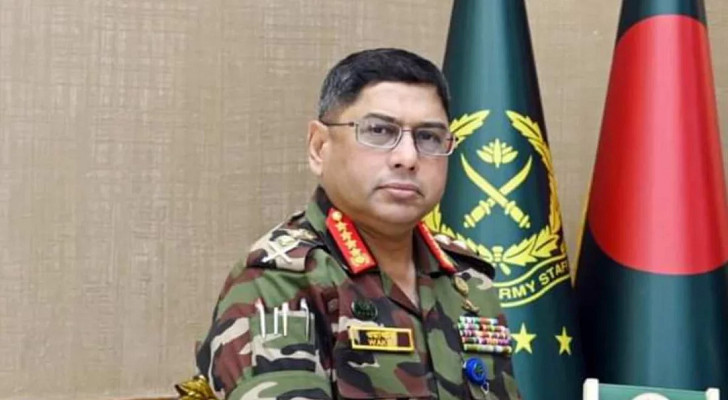
Dhaka, Bangladesh – Bangladesh Army Chief General Waker-uz-Zaman has firmly rejected a proposal by the interim government to establish a so-called humanitarian corridor through Bangladesh to deliver aid to Myanmar’s conflict-ridden Rakhine State, declaring, “No bloody corridor business.” The statement, delivered during a Durbar held on May 21, 2025, has ignited a firestorm of debate in Bangladesh and drawn significant attention in Indian and international media, highlighting tensions between the military and the Yunus-led interim government, as well as complex regional dynamics surrounding the Rohingya crisis.
The Corridor Controversy
The proposal, put forward by the interim government under Chief Adviser Muhammad Yunus, aimed to facilitate the delivery of food and medical supplies to Rakhine State, where ongoing violence between Myanmar’s military junta and ethnic armed groups has displaced thousands, including the persecuted Rohingya minority. Bangladesh, which already hosts over 1.2 million Rohingya refugees, has been grappling with the humanitarian and economic burden of the crisis since the 2017 exodus from Myanmar. The corridor was presented as a means to alleviate suffering in Rakhine State while potentially easing pressure on Bangladesh’s overcrowded refugee camps.
However, the Bangladesh Army, led by General Waker-uz-Zaman, has taken a hardline stance against the proposal. In his address to military officers, the army chief emphasized that no Bangladeshi territory would be used for any corridor, humanitarian or otherwise, that could compromise national sovereignty. “The land of Bangladesh will not be handed over to anyone for use as a corridor or for any other purpose,” he stated, invoking the sacrifices of the 1971 Liberation War to underscore the military’s commitment to protecting national interests. Commanding officers reportedly echoed this sentiment, declaring, “No compromise on the Liberation War.”
The legitimacy of the interim government and the possible geopolitical repercussions of the corridor are the main reasons for the Army’s objection. General Waker-uz-Zaman argued that an unelected government lacks the mandate to make decisions with significant long-term implications, such as ceding control of Bangladeshi territory or infrastructure, including ports, to foreign entities. The article suggests that the military views the proposal as a risky move that could invite foreign influence or entangle Bangladesh further in Myanmar’s internal conflict.
Public and Political Reaction
The army chief’s statement has resonated strongly with segments of the Bangladeshi public, particularly on social media platforms like Facebook and X, where users have expressed support for the military’s nationalist stance. Posts on X describe the proposal as an overreach by the interim government, with users like @FreedomIs1971 and @avarakai praising General Waker-uz-Zaman for prioritizing sovereignty. “Actions speak louder than words, but we saw them in no action zone!” wrote one user, reflecting frustration with the interim government’s handling of the issue.
Critics of the proposal argue that the corridor could set a precedent for foreign involvement in Bangladesh’s affairs, with some speculating about the involvement of international actors in pushing the plan. The military’s rejection was partly driven by concerns that the corridor could involve handing over control of a port to a foreign entity, though no specific country or organization was named.
The interim government’s National Security Advisor, Khalilur Rahman, has sought to downplay the controversy, describing the corridor as a purely humanitarian initiative to send medicines and food to Rakhine State. However, this explanation has been met with skepticism, with some netizens accusing Rahman of “spin doctoring” to deflect criticism. The public backlash underscores broader distrust in the interim government, which has struggled to establish legitimacy since taking power in August 2024 following the ousting of Prime Minister Sheikh Hasina.
Regional and International Dimensions
The rejection of the corridor proposal has significant implications for South Asia, particularly for Bangladesh’s relations with Myanmar and its powerful neighbor, India. Indian media outlets, including NDTV and OpIndia, have extensively covered the issue, framing it as a bold assertion of Bangladesh’s sovereignty amid regional power dynamics. India, which shares a 4,096-kilometer border with Bangladesh and has its own concerns about the Rohingya refugee crisis, is likely monitoring the situation closely. The corridor proposal, if implemented, could have altered regional humanitarian and security dynamics, potentially affecting India’s strategic interests in the Bay of Bengal.
Internationally, the controversy highlights the challenges of addressing the Rohingya crisis. Myanmar’s military junta, which seized power in 2021, has restricted humanitarian access to Rakhine State, leaving millions in need of aid. While the corridor was intended to address this gap, Bangladesh’s refusal reflects its prioritization of national interests over regional humanitarian obligations. A BDDiGEST article notes that the army’s stance aligns with a broader sentiment in Bangladesh that the country has already borne a disproportionate burden in hosting Rohingya refugees.
Tensions in Governance
The public dispute between the army and the interim government exposes deeper tensions in Bangladesh’s political landscape. The Yunus-led administration, tasked with stabilizing the country and preparing for elections, faces challenges in navigating its relationship with the powerful military. General Waker-uz-Zaman’s remarks, particularly his assertion that an unelected government cannot make major decisions, signal a potential power struggle that could shape Bangladesh’s political future.
The BDDiGEST article also highlights internal military dynamics, noting “deep dissatisfaction” among army ranks over the corridor issue. This dissatisfaction reportedly led to pressure for the removal of dismissed officer Kamrul Hasan, though details about his role or dismissal remain unclear. The military’s unified opposition to the proposal underscores its influence as a key institution in Bangladesh, particularly in matters of national security and sovereignty.
Critical Perspective and Unanswered Questions
While the army’s stance has been framed as a defense of national sovereignty, questions remain about the interim government’s intentions and the specifics of the corridor proposal. The BDDiGEST article and posts on X do not provide detailed evidence of foreign involvement or the exact terms of the proposal, raising the possibility that the controversy may be amplified by misinformation or political posturing. The phrase “no bloody corridor business,” while striking, requires verification through official military statements to confirm its authenticity and context.
Moreover, the interim government’s legitimacy crisis complicates the narrative. While the military’s position aligns with public sentiment on sovereignty, the lack of transparency about the corridor’s details fuels speculation and distrust. Analysts suggest that the Yunus administration must engage in greater public consultation to avoid further alienating key stakeholders, including the military and the public.
Looking Ahead
The rejection of the humanitarian corridor proposal has effectively stalled discussions, but the issue is far from resolved. The interim government faces mounting pressure to clarify its plans and address public concerns, while the army’s assertive stance reinforces its role as a guardian of national interests. As Bangladesh navigates this delicate balance, the international community, including the United Nations and regional powers, will likely continue to press for solutions to the Rohingya crisis.
For now, General Waker-uz-Zaman’s blunt declaration has become a rallying cry for those prioritizing Bangladesh’s sovereignty, ensuring that the debate over the “bloody corridor business” will remain a focal point in the country’s political and regional discourse. The interim government must tread carefully to maintain stability while addressing the humanitarian and geopolitical challenges at its doorstep.



 The Asiapost News
Leave a comment