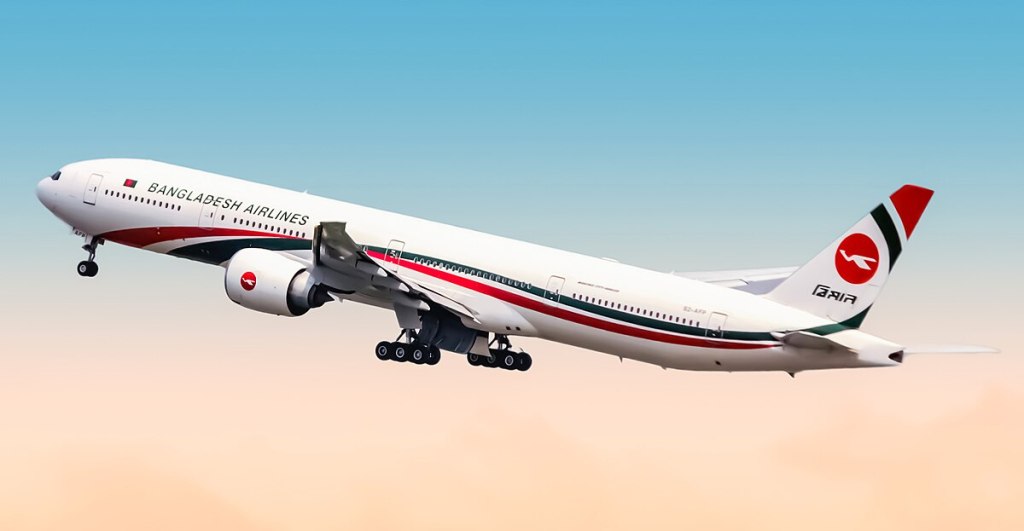
Biman Bangladesh Airlines, the nation’s flag carrier, stunned travelers by suspending its Dhaka-Narita-Dhaka flight route effective July 1, 2025, a decision driven by operational constraints, aircraft shortages tied to Hajj operations, and crippling financial losses. Relaunched in September 2023 after a 17-year hiatus, the route has hemorrhaged money—over Tk 84 crore (roughly USD 7 million) from September 2023 to April 2024, with some estimates soaring to Tk 166 crore. As Biman grapples with this setback, the interim administration under Muhammad Yunus, in power since August 2024, has struggled to steer the airline toward stability, casting a shadow over its ability to manage state-owned enterprises. This article explores the suspension, the financial toll, and the broader context of Biman’s challenges, highlighting how the current leadership’s oversight may have deepened the airline’s woes.
A Troubled History
Since its inception in 1972, Biman has operated from Hazrat Shahjalal International Airport in Dhaka, often wrestling with financial struggles on international routes like Dhaka-Narita. Launched in 1979, the route was halted in 1981, briefly resumed, and stopped again in 2006 due to persistent losses. Its 2023 revival aimed to capitalize on Bangladesh-Japan ties and draw passengers from India and Nepal. Yet, within 21 months, Biman announced another suspension, a move that reflects not only operational hurdles but also questions about the interim administration’s capacity to address the airline’s long-standing issues.
Why the Suspension?
Biman cited three main reasons for halting the Dhaka-Narita route:
- Hajj Demands: The annual Hajj pilgrimage stretches Biman’s fleet, diverting aircraft from regular routes.
- Aircraft Shortages: With only 21 aircraft, including four Boeing 787-8s and two Boeing 787-9s used for Narita, Biman struggles to meet its commitments.
- Financial Losses: The route’s unprofitability, driven by low passenger numbers and high costs, has proven unsustainable.
The Financial Toll
The numbers are stark. The Daily Star reported losses exceeding Tk 84 crore from September 2023 to April 2024, averaging Tk 4 crore monthly. Prothom Alo estimated even higher losses—Tk 166 crore over eight months, or Tk 20 crore per month. These figures underscore the route’s financial burden, amplified by:
- Empty Seats: Flying Boeing 787-8s (271 seats) and occasionally 787-9s (298 seats), Biman often saw nearly half its seats empty, dragging down its load factor.
- Pricing Missteps: Biman’s average fare of USD 291 for direct Dhaka-Narita flights was far below the USD 683 charged by competitors for connecting flights, undermining revenue.
- High Costs: Long-haul flights on Boeing 787s incur steep fuel, maintenance, and crew expenses, which low passenger numbers couldn’t cover.
Under the interim administration, these financial challenges have persisted, with little evidence of strategic interventions to reverse the trend, raising concerns about the government’s ability to stabilize Biman’s operations.
Operational Struggles
Biman’s 21-aircraft fleet is stretched thin, particularly during Hajj season when planes are dedicated to pilgrimage flights. The Dhaka-Narita route, scaled back from three to two weekly flights in the 2024 winter schedule (October 27, 2024, to March 29, 2025), couldn’t withstand these pressures. A failed push to justify Airbus purchases, combined with reliance on Boeing aircraft, further hampered fleet management. The interim administration’s lack of decisive action to address these constraints has left Biman scrambling, with the Narita route an early casualty.
Political and Strategic Factors
Since taking power in August 2024, the interim administration led by Muhammad Yunus has faced a turbulent economic and political landscape. While inheriting Biman’s challenges, the government’s focus on governance reforms has yet to yield meaningful support for the airline, allowing losses to mount and operational issues to fester.
The 2023 relaunch of the Narita route, driven by then-Managing Director Shafiul Azim and acting Director of Sales and Marketing Salauddin Ahmed, reportedly lacked a thorough commercial feasibility study. Insiders point to political motives under the previous government, including U.S. tensions and a push to justify Airbus purchases, backed by former adviser Salman F. Rahman. Under the current administration, scrutiny of unprofitable routes has increased, likely prompting the suspension. However, the failure to implement proactive measures—such as fleet expansion or marketing reforms—suggests a missed opportunity to salvage the route, casting doubt on the government’s strategic oversight.
Economic and Market Pressures
Bangladesh’s economic woes, including currency depreciation and inflation, have hit Biman hard, with fuel and maintenance costs soaring. Tightened visa policies by countries like India have reduced passenger traffic, impacting routes like Delhi and Kolkata, and indirectly affecting Narita’s viability. Eight competing airlines carried 34,889 passengers via connecting flights in the first eight months of Biman’s resumed operations, outpacing Biman’s capacity of 56,368 seats. The interim administration’s economic policies have yet to ease these pressures, leaving Biman vulnerable to market competition and financial strain.
Questions of Mismanagement
Biman’s history is marred by allegations of poor planning and corruption. The Narita route’s relaunch without robust market analysis reflects this pattern. Shafiul Azim, now at the Election Commission, defended the decision as board-approved, dismissing claims of inadequate planning. Aviation expert Kazi Wahidul Alam criticized Biman’s weak marketing, which failed to fill seats. Plans for code-sharing with airlines like Japan Airlines or Air Canada fell flat. Under the current administration, these missteps have gone unaddressed, with no clear strategy to tackle Biman’s systemic issues, further eroding confidence in its leadership.
Impact on Stakeholders
The suspension ripples across stakeholders:
- Passengers: Those with bookings post-July 1, 2025, can seek full refunds or reissue tickets without penalties via Biman’s sales offices or agents.
- Employees: The move strains Biman’s workforce, though no layoffs tied to Narita have been reported.
- Government and Public: The interim administration faces growing scrutiny over its handling of state-owned enterprises like Biman, a national symbol weighed down by losses. Public frustration may mount if the government fails to deliver results.
Biman’s Bigger Picture
The Narita route is just one of Biman’s struggles. Only 11 of its 21 international routes, including London, Toronto, and Dubai, are profitable, while six, like Narita, Manchester, and Guangzhou, bleed money. Ambitious plans to expand the fleet to 47 aircraft by 2034 and launch routes to Australia and New York seem optimistic given current challenges. The interim administration’s reforms, aimed at curbing corruption and boosting efficiency, have yet to make a dent in Biman’s financial woes, raising questions about its commitment to revitalizing the airline.
Looking Ahead
Biman’s suspension of the Dhaka-Narita route highlights deep-rooted issues: operational inefficiencies, strategic missteps, and economic pressures. To recover, the airline needs rigorous feasibility studies, stronger marketing, and smarter fleet management—potentially through leasing or phased expansion. The interim administration, tasked with stabilizing Bangladesh’s economy, must take decisive action to address Biman’s mismanagement and restore its financial health. Without such efforts, the airline risks further setbacks, undermining its role as the nation’s flag carrier and the government’s credibility in managing critical institutions.
Sources
- The Daily Star, May 18-19, 2025
- Dhaka Tribune, May 18, 2025
- Prothom Alo, September 13, 2024
- BSS News, May 18, 2025
- The Business Standard, May 18, 2025
- New Age, May 18-19, 2025
- Japan Aviation Hub, September 16, 2024
- bdnews24.com, May 18, 2025



 The Asiapost News
Leave a comment