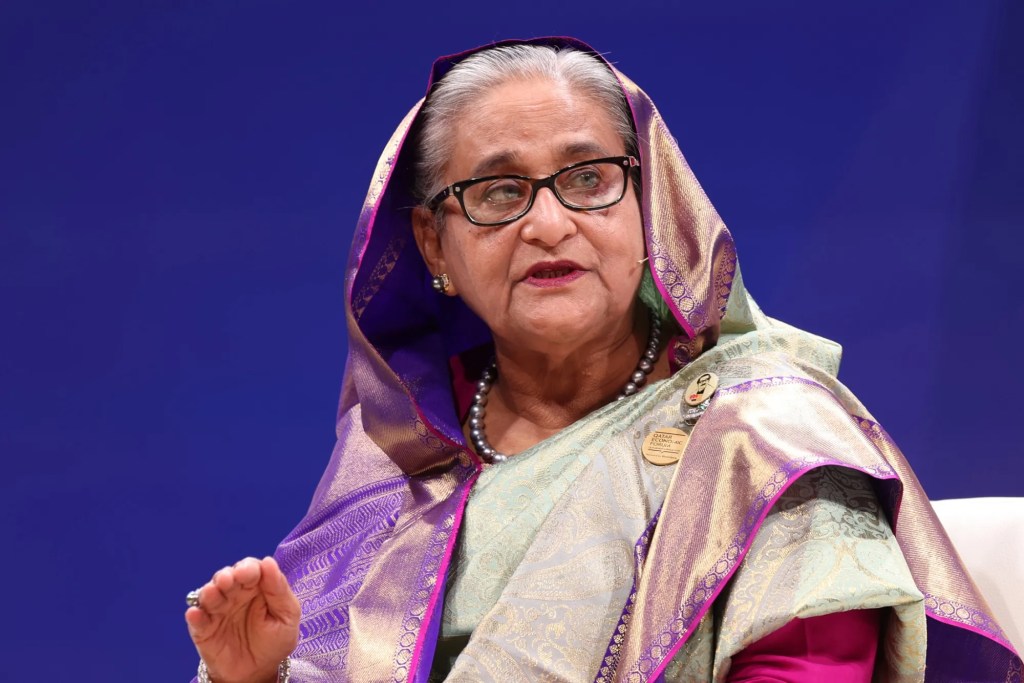
New Delhi, May 14, 2025 – India has expressed unease over the Bangladesh interim government’s decision to ban the Awami League, the political party led by former Prime Minister Sheikh Hasina, under the Anti-Terrorism Act. The move, announced on May 10 and formalized on May 12, prohibits all activities of the Awami League pending trials for alleged crimes during the July 2024 uprising. India’s concerns highlight fears of a deepening political vacuum in Bangladesh, raising questions about the country’s democratic trajectory.
A Controversial Ban
The interim government, led by Nobel laureate Muhammad Yunus, justified the ban as a measure to protect national security and ensure the safety of those involved in trials at the International Crimes Tribunal (ICT). The Awami League, a cornerstone of Bangladesh’s political landscape since 1949, faces accusations of orchestrating violent crackdowns during last year’s protests, which claimed around 1,400 lives. The ban, coupled with the party’s deregistration by the Bangladesh Election Commission on May 13, bars it from contesting upcoming elections, expected between December 2025 and June 2026.
Shafiqul Alam, press secretary to Yunus, defended the decision, calling the Awami League a “corrupt, anti-democracy” force. However, the swift amendment of the Anti-Terrorism Act to target entire political parties has drawn scrutiny, with critics arguing it lacks transparency and risks politicizing the judiciary.
India’s Diplomatic Response
On May 13, India’s Ministry of External Affairs spokesperson Randhir Jaiswal voiced New Delhi’s concerns. “The ban on the Awami League without due process is a concerning development,” he said, emphasizing that “curtailment of democratic freedoms and shrinking political space” threatens Bangladesh’s stability. India urged the interim government to hold “free, fair, and inclusive elections” at the earliest to restore democratic governance.
India’s position reflects its longstanding ties with the Awami League, which has historically aligned with New Delhi’s regional interests. Hasina, ousted in August 2024 and now in exile in India, remains a pivotal figure in bilateral relations. Her government fostered cooperation on trade, security, and connectivity, making the ban a sensitive issue for India.
Fears of a Political Vacuum
The ban risks sidelining a major political force, potentially creating a void that could destabilize Bangladesh’s fragile political landscape. The Awami League, despite its recent controversies, commands significant grassroots support and represents secular, nationalist values. Its exclusion from the electoral process may incite discontent among supporters, who have referred to the ruling as “illegitimate,” or it may encourage Islamist organizations like the Jamaat-e-Islami, which has advocated for the ban.
Analysts warn that suppressing a historic party without clear legal justification could erode trust in democratic institutions. “Banning the Awami League may seem like a short-term solution to address past grievances, but it risks long-term instability,” said Dr. Anika Rahman, a Dhaka-based political scientist. “A balanced political space is essential for Bangladesh’s recovery.”
The interim government’s actions come amid broader tensions, including reports of violence against minorities, particularly Hindus, which India has repeatedly flagged. These developments have strained India-Bangladesh relations, with New Delhi wary with Bangladesh’s political direction under Yunus’s administration.
International Echoes
The United Nations has cautioned that banning political parties could undermine Bangladesh’s multiparty democracy, urging impartiality in the ICT trials. The international community, while acknowledging the need for accountability for the 2024 violence, has called for restraint to avoid further polarization.
The Awami League, in a statement from its exiled leadership, vowed to resist the ban and appealed to democratic nations for support. The party’s future remains uncertain, as does its ability to reorganize under mounting legal and political pressure.
Looking Ahead
As Bangladesh navigates this turbulent period, the ban on the Awami League underscores the challenges of balancing justice with democratic principles. India’s call for due process and early elections reflects a broader concern: without inclusive governance, Bangladesh risks sliding into deeper instability. The international community will be watching closely as the interim government charts its next steps, with the hope that dialogue and transparency can pave the way for a stable, democratic future.



 The Asiapost News
Leave a comment