Special Correspondent
Amsterdam, Netherlands – May 11, 2025
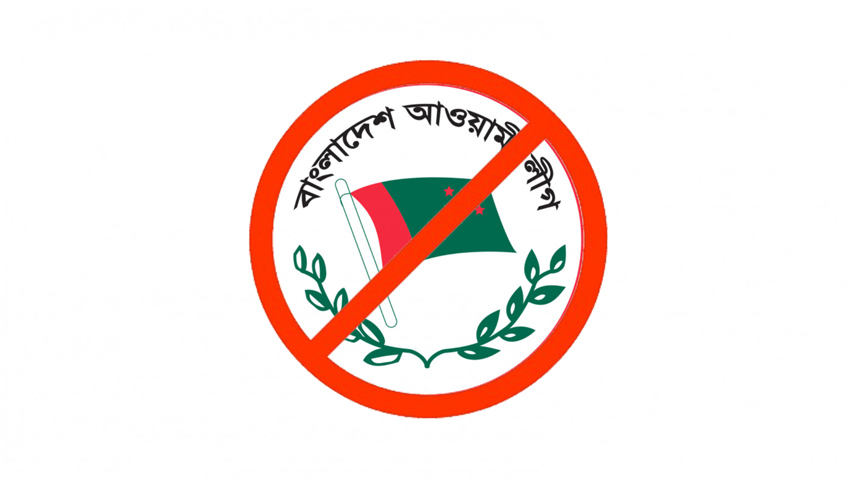
In a seismic blow to Bangladesh’s political fabric, the interim government, led by Nobel laureate Muhammad Yunus, banned the Awami League—the nation’s oldest political party and the vanguard of its 1971 independence—on May 10, 2025, under the Anti-Terrorism Act. The decision, which halts all Awami League activities pending trials at the International Crimes Tribunal (ICT), has been hailed by some as retribution for past atrocities but decried by others as a grotesque violation of democratic principles. Meanwhile, designated terrorist organizations like Ansarullah Bangla Team (ABT) and Hizb-ut-Tahrir operate with chilling impunity, their leaders openly rallying in Dhaka’s streets. Most glaringly, Jamaat-e-Islami, a party complicit in the 1971 genocide, faces no such ban despite its dark history. This stark double standard, enacted by an unelected government, raises urgent questions about Bangladesh’s democratic trajectory and the selective pursuit of justice.
A Historic Party Silenced
Founded in 1949, the Awami League is synonymous with Bangladesh’s liberation. Under Sheikh Mujibur Rahman, widely considered as the founding father of Bangladesh, it spearheaded the 1971 War of Independence against Pakistan, securing victory at the cost of millions of lives. For 15 years, until August 2024, it governed under Sheikh Hasina, Mujibur’s daughter, driving economic progress but facing accusations of authoritarianism. The party’s downfall came amid a student-led uprising in July 2024, sparked by protests over public sector job quotas, which swelled into a nationwide revolt. The violence allegedly claimed over 800 lives, with the Awami League accused of orchestrating a brutal crackdown. Hasina fled to India on August 5, 2024, and the interim government took power three days later.
On May 10, 2025, following fierce protests led by the newly founded National Citizen Party (NCP) and Islamist groups like Jamaat-e-Islami and Hefazat-e-Islam, the interim government banned the Awami League, citing its “autocratic rule” and “terrorist activities” during the 2024 protests. The ban, enacted under the Anti-Terrorism Act, prohibits all party activities, including rallies and online operations, until ICT trials of its leaders, including Hasina, are complete. Amendments to the ICT Act now allow prosecution of political parties for crimes against humanity, targeting the Awami League for alleged extrajudicial killings and forced disappearances.
Yet, the ban’s legitimacy is shaky. In October 2024, the Bangladesh High Court dismissed a writ seeking to ban the Awami League, ruling that such a move required legislative or electoral processes, not executive decree. The interim government’s defiance of this ruling underscores its lack of a public mandate, fueling charges of overreach.
The Bangladesh Nationalist Party’s position on the ban has been confusing. Earlier, BNP Acting Chairman Tarique Rahman stated, “Only an elected government can do that,” emphasizing the need for democratic legitimacy in such decisions. However, on May 10, 2025, BNP Secretary General Mirza Fakhrul Islam Alamgir declared at a rally in Chattogram, “The 18 crore people of the country no longer want Awami League and the party should be banned,” suggesting BNP support for the interim government’s action. This contradiction has sparked debate, with analysts noting that Fakhrul’s statement aligns with public sentiment but contradicts the party’s earlier calls for judicial or electoral processes over executive bans.
Terrorists and Genocide Collaborators Unchecked
While the Awami League faces erasure, designated terrorist organizations and historical war criminals operate with alarming freedom. Jasimuddin Rahmani, spiritual leader of Ansarullah Bangla Team (ABT), an Al-Qaeda-affiliated group banned since 2013, epitomizes this contradiction. Convicted in 2015 for abetting the murder of secular blogger Ahmed Rajib Haider and charged with inciting violence under the Anti-Terrorism Act, Rahmani was released on August 26, 2024, after securing bail and having charges withdrawn post-Hasina. On May 9, 2025, he joined anti-Awami League protests in Dhaka’s Shahbagh, flanked by supporters waving Hizb-ut-Tahrir flags—a banned group advocating a global Islamic Caliphate.
Hizb-ut-Tahrir, outlawed since 2009, staged a “March for Khilafat” on March 7, 2025, drawing thousands to Dhaka’s Baitul Mukarram National Mosque. The rally turned violent, yet only 36 arrests followed, signaling lax enforcement. Similarly, Hefazat-e-Islam, a hardline Islamist group, mobilized 20,000 supporters on May 3, 2025, to oppose women’s rights proposals and demand the Awami League’s ban, showcasing their unchecked clout.
These groups’ resurgence contrasts sharply with the Awami League’s fate. ABT, under Rahmani, is linked to the murders of bloggers Avijit Roy, Washiqur Rahman, and Ananta Bijoy Das, as well as the 2016 killing of LGBT activist Xulhaz Mannan. Hizb-ut-Tahrir’s pan-Islamist agenda threatens regional stability, with Rahmani’s September 2024 video calling for secessionist uprisings in India and solidarity with Pakistan-based militants.
Most perplexing is the treatment of Jamaat-e-Islami, a party with a bloodstained past. During the 1971 War of Independence, Jamaat-e-Islami collaborated with the Pakistani military, forming militias like Al-Badr and Al-Shams that perpetrated atrocities against Bengali civilians. The Bangladesh Liberation War Museum estimates that the 1971 genocide resulted in 3 million deaths, 200,000–400,000 rapes, and the displacement of 10 million people. Jamaat’s leaders, including Ghulam Azam and Motiur Rahman Nizami, were convicted by the ICT in 2013–2016 for war crimes, with Nizami executed in 2016. The party’s student wing, Islami Chhatra Shibir, was implicated in mass killings, abductions, and looting, targeting intellectuals and freedom fighters. Estimates suggest Al-Badr alone executed over 1,100 intellectuals in December 1971.
If the Awami League is banned for the alleged 800 murders during the 2024 protests, why does Jamaat-e-Islami, complicit in a genocide of millions, face no such reckoning? Reports indicate the interim government lifted restrictions on Jamaat and Shibir, allowing them to join anti-Awami League protests. “The hypocrisy is staggering,” said Sara Hossain, a Dhaka-based human rights lawyer. “A party that fought for independence is outlawed, while one that aided genocide marches freely. Where is the moral consistency?”
Double Standards and Democratic Decay
The interim government’s selective enforcement lays bare a troubling double standard. The Awami League’s ban was driven by public fury over the 2024 protest deaths, amplified by NCP and Islamist-led demonstrations. The government, lacking electoral legitimacy, framed the ban as a response to UN-documented abuses, including 800 deaths and widespread detentions. Yet, it has failed to curb banned terrorist groups like ABT and Hizb-ut-Tahrir, whose leaders exploit the post-Hasina political vacuum. Jamaat-e-Islami’s resurgence, despite its genocidal legacy, further exposes this inconsistency.
Several factors fuel this disparity. First, the interim government’s weak grip on security has allowed extremist groups to resurface. Rahmani’s release, alongside ABT’s India operations head Ikramul Haque during a Sherpur jailbreak on August 6, 2024, reflects a collapse in law enforcement. Second, the government prioritizes dismantling the Awami League’s legacy to appease protest groups, including Islamists who fueled the 2024 uprising. “Yunus is caught in a bind,” said a professor from a reputed university. “He’s targeting the Awami League to placate the streets but shying away from Islamists to avoid chaos.”
The interim government’s lack of a public mandate amplifies these concerns. Installed on August 8, 2024, without elections, it operates in a legal limbo, with elections delayed until December 2025–June 2026. Its actions—banning a historic party while tolerating terrorists and war criminals—erode its credibility.
Regional and Global Ramifications
The Awami League’s ban and the rise of Islamist militancy reverberate beyond Bangladesh. Hasina’s government was a staunch ally of India, cooperating on counterterrorism and upholding secularism. Rahmani’s anti-India rhetoric, including calls to “hoist Islamist flags over Delhi,” and ABT’s operations in Assam and Tripura alarm New Delhi, which banned Hizb-ut-Tahrir in 2024. Jamaat-e-Islami’s 1971 collaboration with Pakistan adds a layer of regional distrust, given its anti-India stance. The interim government’s leniency toward Islamists risks straining India-Bangladesh ties, especially as Dhaka presses for Hasina’s extradition.
Globally, the ban has sparked alarm. Human Rights Watch and Amnesty International have called for transparent ICT trials and cautioned against politicized justice. The UN, while documenting Awami League abuses, urges electoral solutions over bans. The unchecked activities of terrorist groups and Jamaat-e-Islami raise fears of Bangladesh becoming a hub for regional militancy, reminiscent of its early 2000s turmoil.
A Nation at a Crossroads
Bangladesh stands at a precipice. The Awami League’s ban, in defiance of the High Court’s October 2024 ruling, reflects a government bowing to mob pressure rather than upholding democratic norms. The party’s alleged crimes—grave and documented—demand accountability, but silencing a liberation icon while terrorists like Rahmani and genocide collaborators like Jamaat-e-Islami roam free is a grotesque perversion of justice. The interim government’s failure to enforce bans on ABT, Hizb-ut-Tahrir, and Jamaat-e-Islami signals a dangerous tilt toward Islamist influence, threatening Bangladesh’s secular legacy.
As protests persist and elections loom, the Yunus administration must confront its contradictions. Restoring democracy requires consistent rule of law, transparent governance, and an end to double standards. Until then, Bangladesh risks a future where the architects of its independence are erased, and the voices of extremism—both terrorist and genocidal—grow louder.



 The Asiapost News
Leave a comment