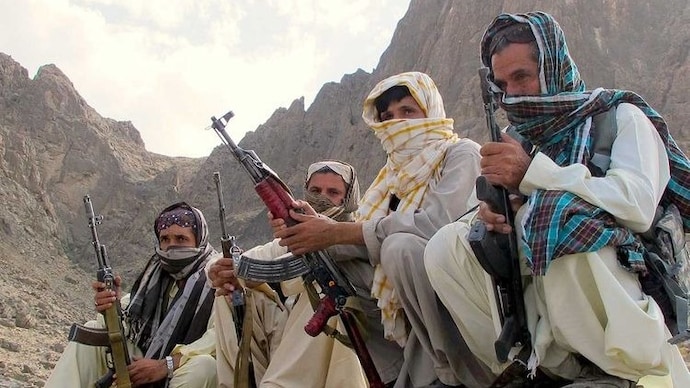
Quetta, Pakistan – In a dramatic escalation of the decades-long insurgency in Pakistan’s Balochistan province, the Baloch Liberation Army (BLA) claimed responsibility for two deadly improvised explosive device (IED) attacks that killed 14 Pakistani soldiers, including senior officers, on Tuesday night. The assaults, targeting military vehicles in the Bolan and Kech districts, underscore the growing audacity of separatist militants and raise questions about Pakistan’s grip on its resource-rich yet impoverished southwestern region.
Deadly Attacks Signal BLA’s Growing Strength
BLA released a statement via its media arm, Hakkal TV, claiming the attacks were “precision assaults” executed with remote-controlled IEDs. The group alleged that a military vehicle in Bolan was obliterated, killing all aboard, including Special Operations Commander Tariq Imran and Subedar Umar Faroo. A second attack in Kech reportedly targeted another convoy, contributing to the total casualty count of 14 soldiers. A viral video circulating on social media, purportedly showing the aftermath of the Bolan attack, has amplified the BLA’s propaganda efforts, though its authenticity remains unverified.
Pakistan’s Inter-Services Public Relations (ISPR) confirmed the attacks but provided limited details, stating that “terrorists belonging to the BLA targeted security forces’ vehicles” and that sanitization operations were underway to neutralize remaining threats. Local police sources reported six additional injuries, and the destroyed vehicles were described as heavily armored, indicating the sophistication of the explosives used. The lack of an official Pakistani statement on the full casualty toll has fueled speculation, with some analysts suggesting the government may be downplaying the scale of the losses.
The attacks follow a string of high-profile BLA operations, including the March 2025 hijacking of the Jaffar Express train, which killed 59 people, and an April assault on supply vehicles for the Chinese-backed Saindak copper-gold project. The BLA’s ability to strike military targets with precision and evade immediate retaliation points to enhanced tactical capabilities, possibly bolstered by access to modern weaponry, including American equipment left in Afghanistan after the 2021 U.S. withdrawal.
Former PM Sounds Alarm on State’s Fading Authority
The timing of the attacks has intensified scrutiny of Pakistan’s control over Balochistan, with former Prime Minister Shahid Khaqan Abbasi issuing a stark warning about the province’s deteriorating security. In an interview with The Balochistan Post on May 5, Abbasi stated, “After dark, the state’s presence on the ground virtually disappears.” He described Quetta, the provincial capital, as a city where senior officials and ministers require armed escorts to move safely, and Baloch armed groups routinely patrol highways and set up checkpoints. Abbasi challenged Army Chief General Asim Munir’s claim that only 1,500 rebels are active, asserting, “Asim Munir can say what he wants, I’m only stating what I’ve seen.”
Abbasi’s remarks, echoed across Pakistani and international media, highlight a growing perception that the federal government is losing its grip on Balochistan. “This is not just a law-and-order issue,” he said. “It is a sign of the state’s fading authority.” His comments reflect broader concerns among Pakistani elites about the military’s inability to quell the insurgency, despite a November 2024 counterinsurgency operation launched under Article 245.
Why Balochistan Seeks Independence
At the heart of the insurgency lies the Baloch people’s demand for independence, driven by decades of economic marginalization, political exclusion, and human rights abuses. Balochistan, Pakistan’s largest province by area, holds vast reserves of natural gas, coal, copper, and gold, yet remains its poorest, with 70% of its 15 million residents classified as multidimensionally poor. The federal government’s control over resources, such as the Sui Gas Fields and Gwadar Port, has generated resentment, as locals see little economic benefit. Major infrastructure projects under the China-Pakistan Economic Corridor (CPEC), including Gwadar’s deep-sea port, are viewed by many Baloch as exploitative, displacing communities and prioritizing foreign interests.
Baloch nationalists argue that their distinct ethno-linguistic identity, rooted in a history of autonomy under the Khanate of Kalat before Pakistan’s 1948 annexation, justifies their push for self-determination. The BLA and allied groups, such as the Baloch Raji Aajoi Sangar (BRAS), frame their struggle as a resistance against a Punjabi-dominated central government that discriminates against the Baloch. “Our resources are plundered, our people are silenced, and our youth are disappeared,” a BLA statement read, referencing the estimated 5,000 cases of enforced disappearances attributed to Pakistani security forces since 2009.
The insurgency’s appeal has grown among Baloch youth, fueled by reports of extrajudicial killings, torture, and the suppression of peaceful protests. The Baloch Yakjehti Committee (BYC), led by activist Mahrang Baloch, has mobilized thousands in non-violent demonstrations, only to face crackdowns under colonial-era laws. Analysts argue that Pakistan’s militarized response, rather than addressing political and economic grievances, has radicalized a new generation, with the BLA’s Majeed Brigade increasingly deploying suicide bombers and sophisticated tactics.
Geopolitical Stakes and Regional Tensions
The attacks carry significant geopolitical implications, given Balochistan’s strategic location bordering Iran and Afghanistan. The BLA’s opposition to CPEC has led to targeted strikes on Chinese nationals and projects, raising concerns in Beijing about the safety of its investments. Pakistan’s military has accused India of backing the BLA, a claim New Delhi denies, further complicating India-Pakistan relations amid heightened tensions following the April 2025 Pahalgam attack in Kashmir.
Security experts warn that the insurgency’s escalation could destabilize the region, with the BLA reportedly coordinating with the Pakistani Taliban and operating from bases in southern Afghanistan. “The BLA’s growing strength is a symptom of deeper failures,” said Abdullah Khan of the Pakistan Institute for Conflict and Security Studies. “Without political dialogue and resource-sharing, the conflict will only worsen.”
A Path Forward?
As Pakistan grapples with the fallout of Tuesday’s attacks, calls for a shift in strategy are growing. Former officials like Abbasi advocate for negotiations with Baloch leaders and implementing constitutional provisions for provincial autonomy. However, the military’s commitment to a hardline approach, backed by $72 million in new funding for counterinsurgency, suggests continued confrontation.
For the Baloch, the dream of independence remains a powerful motivator, rooted in a history of broken promises and systemic neglect. As one Quetta resident, speaking anonymously, put it: “We don’t want to fight, but we want our rights. If Pakistan won’t listen, the BLA will keep speaking with bombs.”
The Pakistani government has vowed to bring the perpetrators to justice, but with the BLA showing no signs of retreat, Balochistan’s volatile future hangs in the balance.
Note: Casualty figures and the BLA’s claims remain unverified by independent sources, and Pakistani authorities have not released a detailed response to the attacks.




 The Asiapost News
Leave a comment