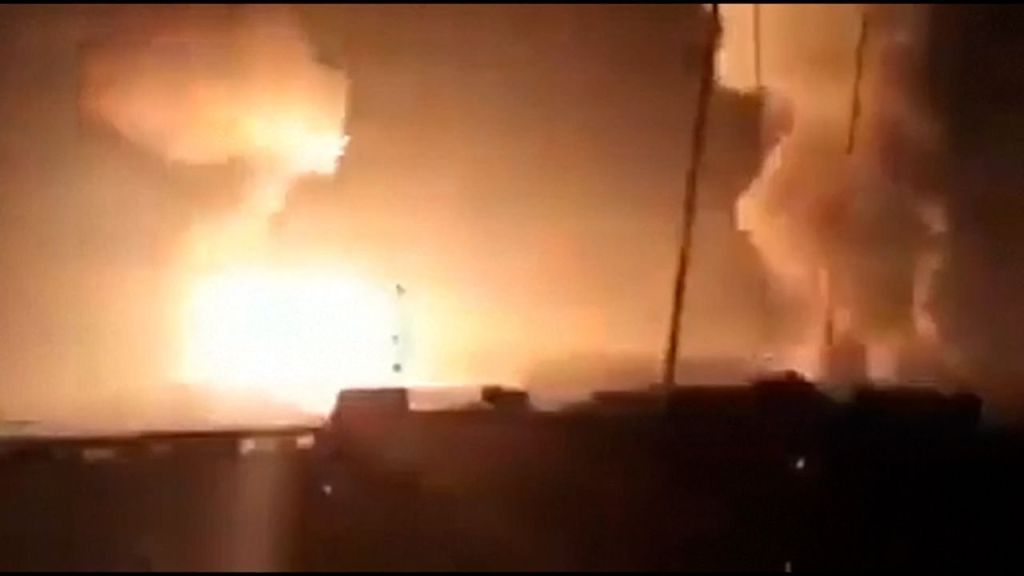
- Operation Sindoor: India conducted missile strikes on May 7, 2025, targeting nine alleged terrorist sites in Pakistan and Pakistan-occupied Kashmir, in response to a deadly attack in Pahalgam, Kashmir.
- Casualties: Pakistan reports at least 26 civilian deaths, while India claims over 70 terrorists were killed, though these figures are unverified and disputed.
- Escalation: Pakistan condemned the strikes as an “act of war,” claiming to have shot down Indian jets, and both sides are exchanging fire along the Line of Control.
- International Concern: The UN, US, and China urge restraint to prevent further escalation between the nuclear-armed neighbors.
- Controversy: India insists it targeted only terrorist infrastructure, while Pakistan claims civilian sites, including a mosque, were hit, highlighting the need for independent verification.
What Happened?
On May 7, 2025, India launched Operation Sindoor, a series of missile strikes targeting what it claims are terrorist bases in Pakistan and Pakistan-occupied Kashmir. The operation was a response to a terrorist attack on April 22 in Pahalgam, Indian-administered Kashmir, which killed 26 people, mostly Hindu tourists. India accuses Pakistan of supporting the militants, a claim Pakistan denies. The strikes have heightened tensions, with both countries reporting casualties and engaging in cross-border shelling.
Why Did India Act?
India says the strikes targeted nine sites linked to groups like Jaish-e-Mohammed and Lashkar-e-Taiba, which it blames for the Pahalgam attack. The operation used advanced weapons, like cruise missiles and drones, and was conducted from Indian airspace to avoid escalation. India claims it killed over 70 terrorists, but these numbers are not confirmed.
Pakistan’s Response
Pakistan reports that the strikes killed at least 26 civilians, including a child, and injured 46 others, with a mosque among the targets. Pakistan’s Prime Minister called it an “act of war” and promised a strong response. Pakistan claims it shot down five Indian jets, but there’s no independent proof. Schools are closed, and Pakistan’s airspace is shut, affecting flights.
What’s Next?
The situation is tense, with both sides firing across the border. The UN and world leaders are calling for calm to avoid a larger conflict, as both countries have nuclear weapons. The lack of verified information about casualties and targets makes it hard to know the full impact, but the risk of escalation remains high.
Detailed Report on India’s Operation Sindoor and Pakistan’s Response
On May 7, 2025, at 1:44 AM local time, India launched Operation Sindoor, a significant military operation involving missile strikes on nine sites in Pakistan and Pakistan-occupied Kashmir (referred to as Pakistan-occupied Jammu and Kashmir or PoJK by India). This operation was a direct response to a terrorist attack on April 22, 2025, in Pahalgam, Indian-administered Kashmir, which killed 26 people, mostly Hindu tourists. India accused Pakistan of backing the militants, a claim Pakistan denies, escalating tensions between the two nuclear-armed neighbors. This report provides a comprehensive overview, synthesizing information from multiple reputable sources to ensure a balanced and detailed understanding.
Context and Trigger
The operation was triggered by the Pahalgam attack on April 22, 2025, where 25 Indians and one Nepali were killed, attributed to Islamist militants by India, with accusations of Pakistani support (Al Jazeera). This incident, described as the deadliest terrorist operation in years on civilians in Kashmir, heightened tensions, with both countries exchanging gunfire along the Line of Control (LoC) since April 24, 2025. The historical context includes multiple wars over Kashmir since 1947, with the last significant escalation being the 2019 Balakot airstrikes, making this the most serious since then.
Operation Details
India conducted precision strikes targeting nine sites identified as “terrorist infrastructure.” These included:
- Bahawalpur and Muridke in Pakistan’s Punjab province, linked to Jaish-e-Mohammed and Lashkar-e-Taiba, respectively.
- Muzaffarabad and Kotli in Pakistan-occupied Kashmir.
The operation utilized advanced weaponry, including SCALP cruise missiles, HAMMER smart bombs, and loitering munitions, conducted from Indian airspace to avoid entering Pakistani territory (India Today). The Indian Ministry of Defence stated the strikes were “focused, measured, and non-escalatory,” targeting only terrorist sites and not Pakistani military facilities, aiming to hold perpetrators accountable while minimizing escalation (Forbes). Prime Minister Narendra Modi reportedly decided the codename “Sindoor,” reflecting a multi-domain land and sea-borne assault involving the Army, Navy, and Air Force (India Today). The term “Sindoor” refers to the red vermilion powder worn by married Hindu women, symbolizing the widows created by the Pahalgam attack.
India claimed that over 70 terrorists were killed and more than 60 wounded, significantly degrading the operational capability of the targeted groups (NDTV). Union Home Minister Amit Shah expressed pride in the armed forces, stating, “Operation Sindoor is Bharat’s response to the brutal killing of our innocent brothers in Pahalgam. The Modi government is resolved to give a befitting response to any attack on India and its people” (India Today).
Pakistani Response and Counter-Claims
Pakistan reported significant civilian casualties, with at least 26 killed and 46 injured, including a child, with specific incidents like a missile hitting a mosque in Bahawalpur (Reuters). Pakistan denounced the strikes as an “unprovoked and blatant act of war,” violating its sovereignty, and vowed a “robust response” (Al Jazeera). Prime Minister Shehbaz Sharif called an emergency session of the National Security Committee, and Pakistan claimed to have shot down five Indian Air Force jets, including three Rafale jets, one MiG-29, and one SU-30, and taken Indian soldiers prisoner (CNN). These claims, however, lack independent verification.
Pakistan also declared a state of emergency in hospitals in Pakistan-occupied Kashmir, closed schools in Punjab and Islamabad, and closed its airspace for 48 hours, disrupting commercial flights (CNN). Pakistan denied involvement in the Pahalgam attack and accused India of targeting civilians, with social media posts and videos showing damage to civilian buildings, including a mosque, though authenticity is unverified (Reuters).
Casualties and Escalation
The casualty figures are contentious:
- Pakistan’s Reports: At least 26 civilians killed, 46 injured, with specific reports of 6 deaths in Ahmadpur East and Muridke (CNN).
- India’s Claims: Over 70 terrorists killed and more than 60 wounded, with significant hits in Bahawalpur and Muridke (NDTV).
- Cross-Border Fire: Both sides reported civilian deaths due to shelling along the LoC, with India reporting three civilians killed in Indian-administered Kashmir and Pakistan engaging in heavy mortar shelling in Poonch and Rajouri districts (Reuters).
The situation remains fluid, with intense firefights reported at multiple locations along the LoC, and both countries suspending civilian flight operations in affected regions, such as Srinagar in India and various Pakistani airports (CNN).
International Reactions
The international community has expressed concern over the escalation:
- United Nations: Secretary-General Antonio Guterres called for “maximum military restraint,” urging both countries to avoid a broader confrontation (Al Jazeera).
- United States: President Donald Trump called the fighting “a shame” and hoped it ends quickly, with Secretary of State Marco Rubio urging both nations to keep lines of communication open (Forbes).
- China: Called for both countries to exercise restraint in the interest of regional peace and stability (India Today).
- Other Countries: World leaders have echoed calls for de-escalation, citing the risks of conflict between two nuclear-armed nations (ABC News).
Economic and Civilian Impacts
The operation has had immediate impacts:
- Airspace and Travel: Pakistan’s airspace closure and India’s suspension of flights in northern regions (e.g., Srinagar) have disrupted regional air travel, with international carriers like Emirates and Qatar Airways diverting flights (CNN).
- Civilian Life: Schools and colleges in Jammu, Samba, Kathua, Rajouri, Poonch in India, and parts of Pakistan, were closed, affecting daily life in border areas (CNN).
- Economic Impact: Pakistan’s stock market reportedly crashed 6% following the strikes, indicating economic repercussions (India Today).
Analysis and Controversy
The operation has sparked significant controversy:
- Disputed Targets: India insists it targeted only terrorist infrastructure, while Pakistan claims civilian areas, including a mosque, were hit. Independent verification is currently unavailable, with social media posts showing damage but lacking authenticity confirmation (Reuters).
- Casualty Discrepancies: The differing reports on casualties—India claiming terrorist deaths, Pakistan reporting civilian casualties—highlight the challenge of verifying information in real-time.
- Risk of Escalation: Analysts describe the situation as “serious and fluid,” with the involvement of nuclear-armed nations raising concerns about a broader conflict. Both sides have emphasized restraint, but Pakistan’s vow to retaliate and India’s justification based on intelligence of further planned attacks suggest ongoing tension (Al Jazeera).
Detailed Table of Key Events
| Date | Event | Details |
|---|---|---|
| April 22, 2025 | Pahalgam Terror Attack | 26 killed, mostly Hindu tourists, India blames Pakistan-backed militants. |
| April 24, 2025 | LoC Fire Exchanges Begin | Both countries exchange gunfire, escalating tensions. |
| May 3–5, 2025 | Pakistan Missile Tests | Conducted tests citing operational readiness amid rising tensions. |
| May 7, 2025 | Operation Sindoor Launched | India strikes nine sites in Pakistan and PoK, targeting terrorist infrastructure. |
| May 7, 2025 | Pakistani Response | Reports 26 civilian deaths, claims to shoot down Indian jets, vows retaliation. |
| May 7, 2025 | International Reactions | UN, US, China call for restraint, highlighting escalation risks. |
Social Media and Public Sentiment
X posts reflect polarized narratives:
- Indian users and media celebrate the strikes as a decisive response to terrorism, with hashtags like #OperationSindoor trending (India Today).
- Pakistani users condemn the strikes as attacks on civilians and mosques, accusing India of aggression without proof (Reuters).
- Speculation about aircraft losses and the scale of the operation is rampant, but official sources have not confirmed these claims, emphasizing the need for skepticism toward unverified information.
Conclusion
Operation Sindoor represents a significant escalation in India-Pakistan relations, driven by the Pahalgam attack and longstanding tensions over Kashmir. While India frames it as a necessary response to terrorism, Pakistan views it as an act of war, with both sides reporting casualties and counter-claims. International calls for restraint underscore the global concern over potential conflict, with the situation remaining fluid as of May 7, 2025. For further updates, monitor official statements from both governments or reputable news outlets like Al Jazeera, Reuters, and CNN.
Key Citations
- India launches attacks on several sites in Pakistan
- Live updates: India’s ‘Operation Sindoor’ strikes hit Pakistan, Pakistan says it has shot down jets
- India launches missile attacks on Pakistan
- Operation Sindoor Live Updates: Targets selected to break backbone of terror, says armed forces
- Operation Sindoor Live Updates: Government Briefs On Operation Sindoor After India Strikes 9 Terror Bases In Pakistan
- India Says It Launched Missile Strikes Against Terrorist Infrastructure in Pakistan
- India attack on Pakistan in wake of Kashmir massacre, airspaces closed around Lahore: Live updates
- Pakistan says it is responding to ‘act of war’ after India missile strikes
- India-Pakistan latest: Pakistan says it shot down Indian jets following airstrikes



 The Asiapost News
Leave a comment