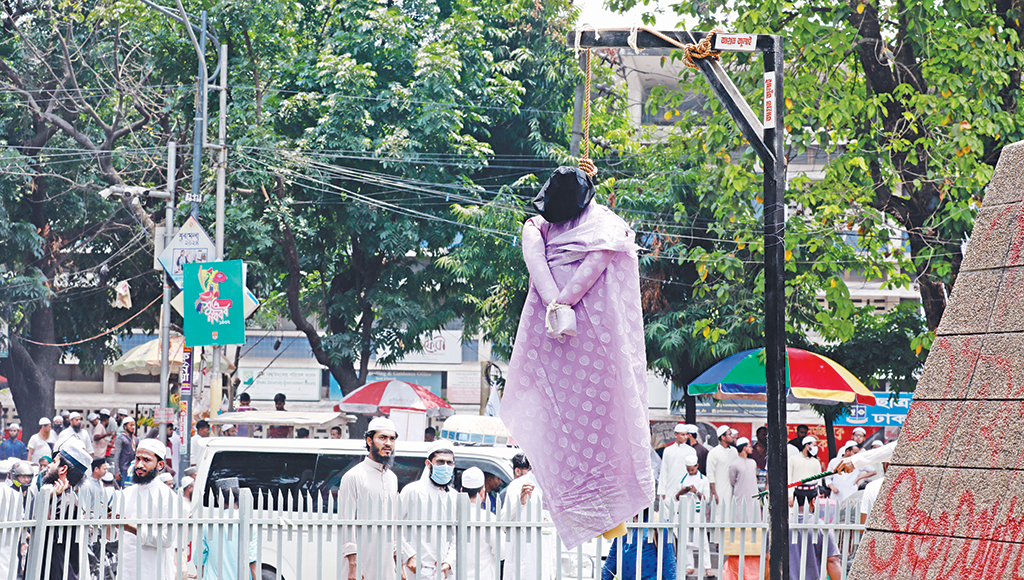
Dhaka, Bangladesh – A firestorm of controversy has erupted in Bangladesh as the Islamist group Hefazat-e-Islam viciously attacks the newly formed Women’s Affairs Reform Commission, labeling it a “prostitute commission” and demanding the annihilation of equal rights for women. Horrific images and videos circulating online show Islamists brutally beating and shoeing an effigy of a woman, a chilling symbol of their rage against the commission’s push for gender equality. As violence against women skyrockets under the interim government of Muhammad Yunus, these developments signal an imminent danger to half the nation’s population.
The “Prostitute Commission” Slur and Islamist Backlash
The Women’s Affairs Reform Commission, established on November 18, 2024, and chaired by rights activist Shireen Parveen Haque, submitted a 433-point report on April 19, 2025, proposing sweeping reforms to advance women’s rights. Key recommendations include doubling parliamentary seats to 600 with 300 reserved for women, ensuring equal inheritance rights, and reforming discriminatory family laws. These proposals, aimed at dismantling Bangladesh’s deeply patriarchal structures, have provoked a ferocious response from Hefazat-e-Islam, a powerful Islamist group rooted in the country’s Qawmi madrasa network.
Hefazat-e-Islam, notorious for its hardline stance against secularism and women’s rights, has branded the commission “anti-Quran” and a “prostitute commission,” a vile slur intended to degrade and delegitimize its work. Bangladeshi newspapers and online outlets, including The Daily Star and Prothom Alo, have published videos of Hefazat leaders, such as Joint Secretary General Maulana Mamunul Haque, openly proclaiming the commission’s proposals as a Western conspiracy to corrupt Islamic values. At a massive rally on May 3, 2025, at Suhrawardy Udyan in Dhaka, thousands of Hefazat supporters demanded the commission’s immediate dissolution, with leaders like Maulana Junaid Al Habib threatening to “paralyze the country” and “set it to fire” if their demands are unmet.
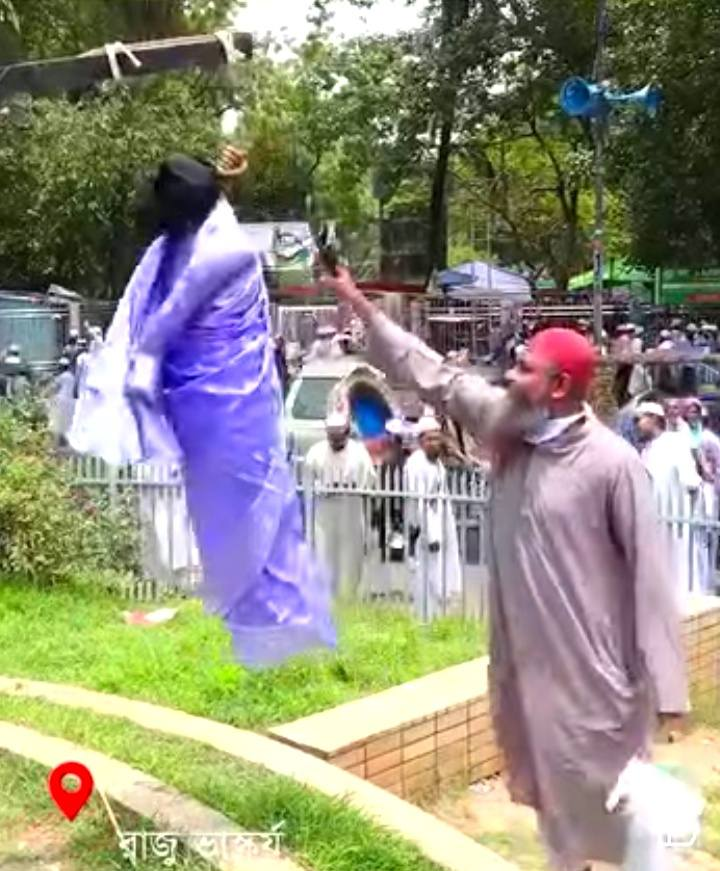
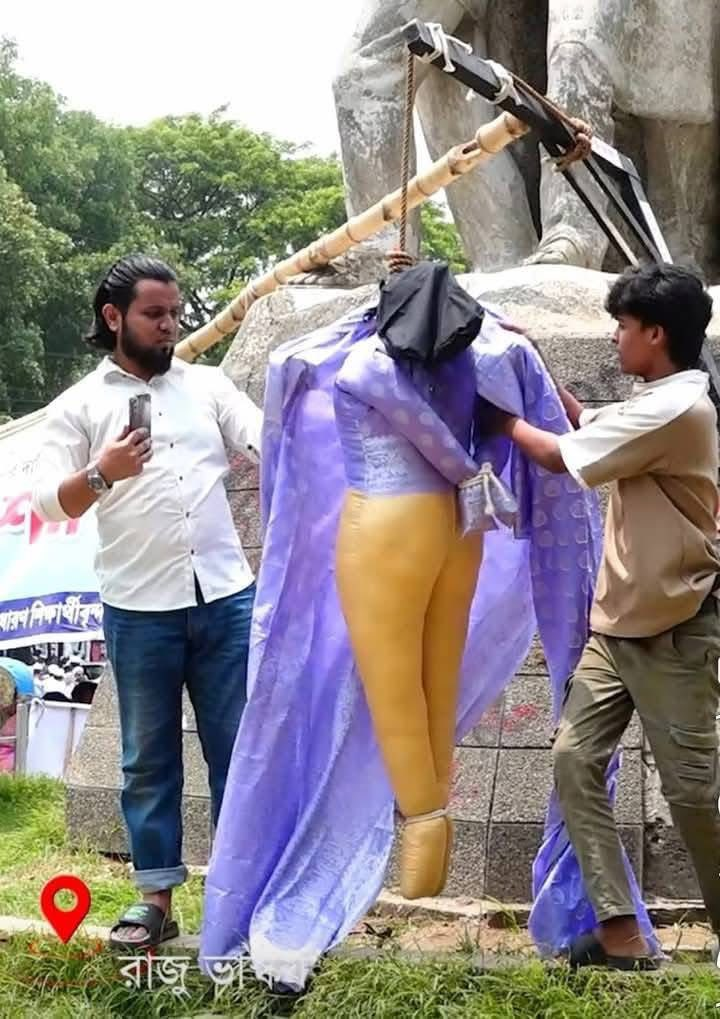
The most shocking display of their contempt came in the form of public spectacles where Hefazat activists were filmed savagely beating and shoeing a woman’s effigy, a grotesque act symbolizing their rejection of women’s empowerment. These images, widely shared on social media, have sparked outrage among women’s rights activists and ordinary Bangladeshis, who see them as a direct threat to women’s safety and dignity. A Facebook post by Daily Khaborer Kagoj on April 22, 2025, echoed the “prostitute commission” rhetoric, claiming the commission promotes a “cursed life” for women, though it stopped short of naming a specific cleric.
Women in Imminent Danger: A National Crisis
The Islamist assault on the Women’s Reform Commission is not an isolated incident but part of a broader surge in violence against women since Yunus’s interim government took power in August 2024, following the ouster of Sheikh Hasina. The Bangladesh Mahila Parishad reported a 25% spike in gender-based violence in September 2024, with cases of rape, domestic abuse, and street harassment becoming alarmingly common. High-profile incidents, such as the gang rape of a housewife in Patuakhali and the brutal assault of an 11-year-old disabled girl in Kishoreganj, underscore the crisis’s severity. In March 2025, the rape of a minor girl, left fighting for her life, ignited nationwide protests, with students blocking highways to demand justice.
Women face danger at every turn—on the streets, in workplaces, and even in police stations. Armed gangs and local criminals, emboldened by a breakdown in law and order, have targeted women with impunity. Human rights groups report that “modern women,” particularly those in visible roles like sports or media, are singled out by Islamists, with the Ansarullah Bangla Team, linked to Al-Qaeda, threatening media companies to fire female employees. The Yunus government’s failure to curb this violence, coupled with its apparent concessions to Islamist groups, has left women vulnerable and justice elusive.
Institutional barriers compound the crisis. Women seeking justice face delays in court, fear of retaliation, and a lack of female-friendly police officers, forcing many to settle for alternative dispute resolution that often favors perpetrators. Over 99% of Bangladeshis hold at least one bias against women, with 69% believing men are better political leaders, according to UN data. These entrenched patriarchal norms, reinforced by practices like child marriage and purdah, perpetuate a culture where women’s rights are routinely trampled.
Hefazat’s Dangerous Influence and Yunus’s Inaction
Hefazat-e-Islam’s campaign against the Women’s Reform Commission is a stark reminder of its growing clout in Bangladesh. Formed in 2010 to oppose secular policies, the group has a history of violent agitation, including the 2013 Shapla Chattar siege in Dhaka, where it demanded blasphemy laws and gender segregation. Its 12-point declaration, announced on May 4, 2025, not only calls for scrapping the commission but also demands mandatory Islamic education, a ban on the Awami League, and the restoration of “complete faith in Allah” in the constitution.
The group’s leaders, including Mufti Syed Rezaul Karim of the Jatiya Olama Mashayekh Aemma Parishad, have issued chilling threats, warning Yunus’s government that it “won’t get even five minutes to escape” if the reforms proceed—an allusion to the mob that drove Hasina from power. Hefazat’s rhetoric, amplified by figures like Mamunul Haque, falsely claims the commission’s proposals would “recognize prostitution as a profession” and “encourage adultery,” stoking fears of moral decay among their followers.
Yunus, a Nobel laureate, has publicly condemned violence against women, calling recent attacks “deeply disturbing” during a March 8, 2025, International Women’s Day event. Yet his government’s actions—or lack thereof—tell a different story. The lifting of the ban on Jamaat-e-Islami, a Hefazat ally, and the release of convicted terrorists like Jashimuddin Rahmani signal a troubling capitulation to Islamist demands. Critics argue that Yunus’s interim government, facing pressure to stabilize the country before elections, is sacrificing women’s rights to appease hardliners.
A Nation at a Crossroads
The vilification of the Women’s Reform Commission as a “prostitute commission” and the barbaric treatment of women’s effigies by Hefazat-e-Islam are not just attacks on a policy but a declaration of war on women’s dignity and equality. With violence against women surging and Islamist influence growing unchecked, Bangladesh stands at a perilous crossroads. The Yunus government’s failure to confront Hefazat’s extremism and enforce justice risks plunging the nation into a dark era where women are stripped of their rights and safety.
Women’s rights activists, like those from the Bangladesh Mahila Parishad, vow to fight back, but they face an uphill battle against a patriarchal system and a government that appears paralyzed. The international community, including the U.S., has raised concerns about rising extremism, urging Yunus to uphold human rights. Yet without decisive action, the promise of a “New Bangladesh” rings hollow for the women who bear the brunt of this crisis.
As Hefazat-e-Islam threatens further agitation, including a nationwide protest on May 23, 2025, the question looms: Will Bangladesh protect its women, or will it succumb to the forces of intolerance and violence? For now, the women of Bangladesh live under a shadow of fear, their fight for equality met with slurs, effigies, and fists.


 The Asiapost News
Leave a comment