Unveil U.S. Plot to Destabilize Bangladesh’s Politics: A Deeper Look at the Gray Zone
In a major revelation, leaked documents have exposed covert U.S. government operations aimed at undermining the political stability of Bangladesh and overthrowing Prime Minister Sheikh Hasina’s government. According to the files, these efforts were facilitated through the International Republican Institute (IRI), a U.S.-funded organization with a long history of involvement in regime change activities globally.
The Path to Destabilization
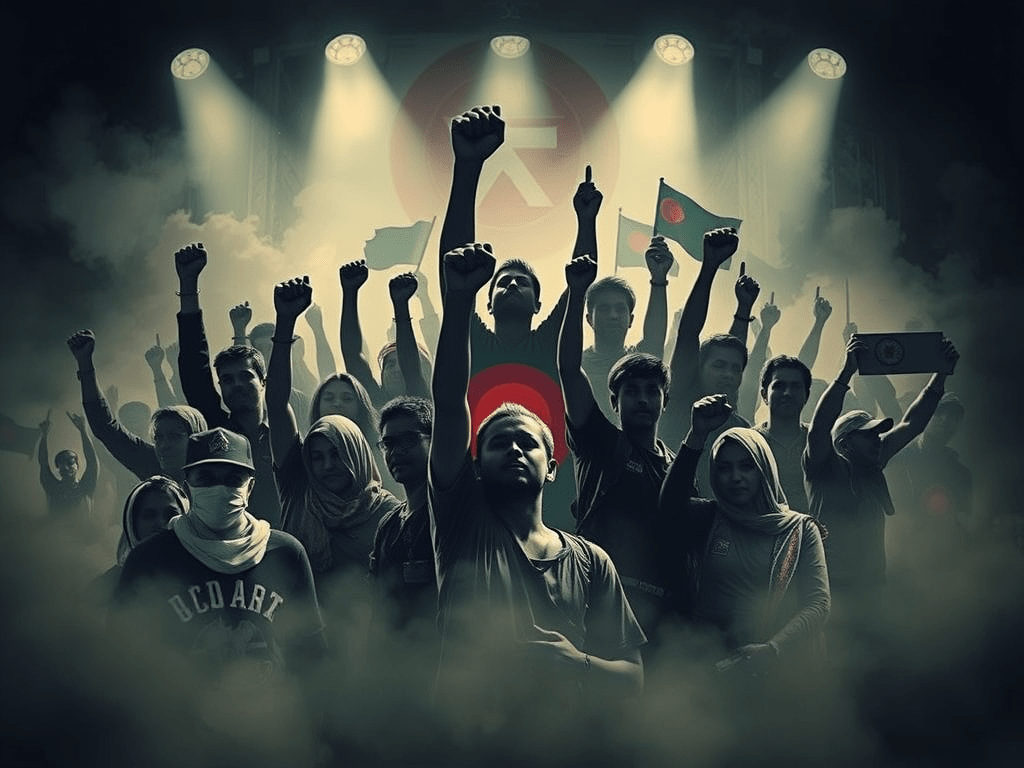
The IRI, backed by the U.S. State Department, reportedly trained an army of activists to push for a “power shift” in Bangladesh. Among the groups targeted were young people, artists, and minority activists, with reports indicating that rappers, LGBT activists, and even transgender performers were groomed to help spread dissent across the country. The documents suggest that the goal was not merely to foster protests but to build a network of influencers who could destabilize the nation’s political landscape.
As tensions rose in Bangladesh, especially following the 2018 student protests over road safety reforms, the IRI began laying the groundwork for a more intense campaign to challenge Hasina’s government. The rise of opposition groups and mounting street protests were seen as key openings for external intervention.
U.S. Government’s Role in the Protests
The leaked files from IRI confirm that, far from being spontaneous, the street protests that ultimately led to the fall of Hasina’s government were deeply influenced by external actors. The U.S. government, through the IRI, allegedly offered “online tools for change” to activists and organized street mobilizations aimed at toppling the ruling Awami League party. These efforts, highlighted by social media-driven campaigns, sought to tap into the political frustrations of youth and minority communities, encouraging them to rally against S Hasina’s leadership.
One of the more striking revelations was IRI’s promotion of “socially conscious artists” and marginalized groups, which included grants for music videos and art performances, with the objective of using cultural tools to stir political unrest. Some of these cultural products were intended to foster dissatisfaction with the government and spread calls for political reforms.
A Cultural Weapon for Regime Change
The leaked documents reveal that the U.S. employed cultural diplomacy as a means to influence the youth. Bangladesh’s hip-hop scene, for example, was identified as a powerful tool for shaping public opinion. Rappers like Toufique Ahmed, whose songs openly targeted the Hasina government, received financial support from IRI to bolster their activism. These tracks, designed to address issues such as poverty, workers’ rights, and social injustice, were used to stoke discontent among young people, especially those engaged in protests and street movements.
While U.S. officials in Washington have denied any involvement in Hasina’s ousting, these newly uncovered files suggest otherwise. The involvement of figures like Yunus, a prominent Bangladeshi economist and U.S. ally, further signals a broader geopolitical strategy to shift Bangladesh into Washington’s orbit.
A Changing Political Landscape in Bangladesh
In the aftermath of the coup that led to Hasina’s flight to India, the political landscape in Bangladesh has dramatically shifted. The new administration, led by Muhammad Yunus, is considered pro-Western and more receptive to U.S. interests. Yunus, a former microfinance champion, has long been an ally of influential American figures, including the Clintons. His rise to power signals a new era for Bangladesh—one in which U.S. influence is set to intensify.
The leaked documents also highlight the role of U.S. lobbying efforts, including the involvement of the controversial firm Blue Star Strategies, which worked with opposition party BNP to secure American support. Despite the BNP’s lack of broad support, IRI viewed them as the most viable option for a power shift.
The Role of External Powers and the Future of Bangladesh
Hasina’s refusal to allow a U.S. military base on Bangladeshi soil appears to have been a pivotal factor in the U.S. push to remove her from power. U.S. diplomats had long tried to sway Hasina, but her alignment with India and her reluctance to cooperate with Washington’s Indo-Pacific strategy proved to be a significant obstacle.
With S Hasina gone and a new interim government in place, the future of Bangladesh remains uncertain. As Yunus seeks to reshape the nation’s political and economic priorities, questions linger over the true extent of foreign interference in the country’s internal affairs. The rise of the BNP, now poised to potentially return to power, could shift Bangladesh’s policies further towards a pro-Western stance.
In the coming months, the world will be watching closely as the situation in Bangladesh unfolds, and the influence of foreign powers, particularly the U.S., continues to shape the nation’s political future.



 The Asiapost News
Leave a comment