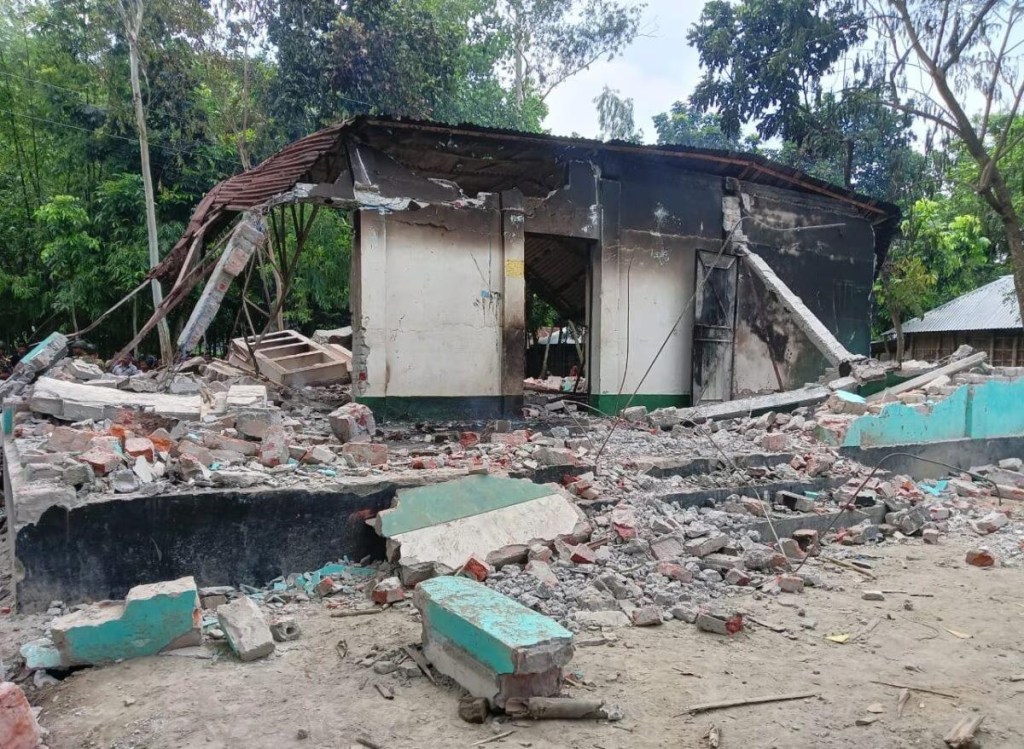
In the heart of Bangladesh, the Ahmadiyya Muslim Community faces an unyielding campaign of persecution that starkly violates the principles of religious freedom and human rights. Among the countless victims of this relentless intolerance, the tragic death of 16-year-old Shahriar Rakeen has become a painful emblem of the community’s ongoing struggle for survival and dignity.
The violence reached a horrifying crescendo on August 5, 2024, when extremists launched coordinated attacks in the Ahmednagar and Panchagarh regions. Homes were ransacked, shops destroyed, and members of the Ahmadiyya community brutally assaulted. Twenty-two people were injured in the chaos, but it was Shahriar who bore the brunt of this hatred. Struck with fatal head injuries, the teenager clung to life for months before succumbing on November 8. His death was not an isolated tragedy; it was the latest chapter in a long and harrowing history of systemic violence and discrimination.
These attacks reveal a grim pattern that has deepened over the years. For decades, the Ahmadiyya community in Bangladesh has been targeted with impunity. Extremists have attacked their homes and businesses, desecrated their graves, and vandalized their places of worship, leaving them to exist in a state of perpetual fear. The violence is not confined to physical acts; it extends to the legal realm, where false accusations and fabricated charges are used to harass and isolate members of the community.
The plight of the Ahmadiyya Muslims in Bangladesh echoes similar struggles faced by religious minorities in neighboring countries, drawing concern from human rights organizations worldwide. The United Nations Human Rights Committee has repeatedly called for action against such persecution, citing violations of fundamental freedoms enshrined in the Universal Declaration of Human Rights. Yet, while global attention often focuses on Pakistan’s treatment of its Ahmadiyya population, the harrowing situation in Bangladesh remains dangerously overlooked.
Advocates, including the International Human Rights Committee, have called for immediate action to stem the tide of violence. They urge the Bangladeshi government to take definitive steps to protect the community, prosecute those responsible for these atrocities, and bring national legislation in line with international human rights standards. But change remains elusive, and the cycle of oppression continues unabated.
The death of Shahriar Rakeen is a haunting reminder of the human cost of this crisis. A bright, young life was extinguished by the flames of hatred and bigotry, leaving a family and a community shattered. His story, while heartbreaking, is not unique—it mirrors the experiences of countless others who have faced similar brutality in silence.
This is more than a localized issue; it is a global human rights challenge that demands attention and action. The persecution of the Ahmadiyya community in Bangladesh threatens the core tenets of religious liberty and human dignity. It raises urgent questions about our collective resolve to defend these values in the face of rising extremism and intolerance.
As the world watches, silence is no longer an option. The international community must recognize the gravity of the situation and act with urgency. For the Ahmadiyya Muslims of Bangladesh, this is not just a fight for survival; it is a plea for justice, for recognition, and for the freedom to live without fear.



 The Asiapost News
Leave a comment