In the dim light of a Dhaka hospital room, the quiet rhythm of a ventilator is the only indication that 16-year-old Shahriar is alive. His father, Abdul, keeps vigil from a narrow hospital balcony, peering through the glass at his unconscious son, whose skull was fractured in the chaos that erupted during Bangladesh’s historic political mayhem.
“I spend the whole day here, just to catch a glimpse of him,” Abdul says, his voice heavy with exhaustion and grief. His son, a vibrant teenager full of promise, now lies motionless, a casualty of a revolution that ousted Bangladesh’s Prime Minister Sheikh Hasina but left a trail of devastation in its wake.
A Nation Upended
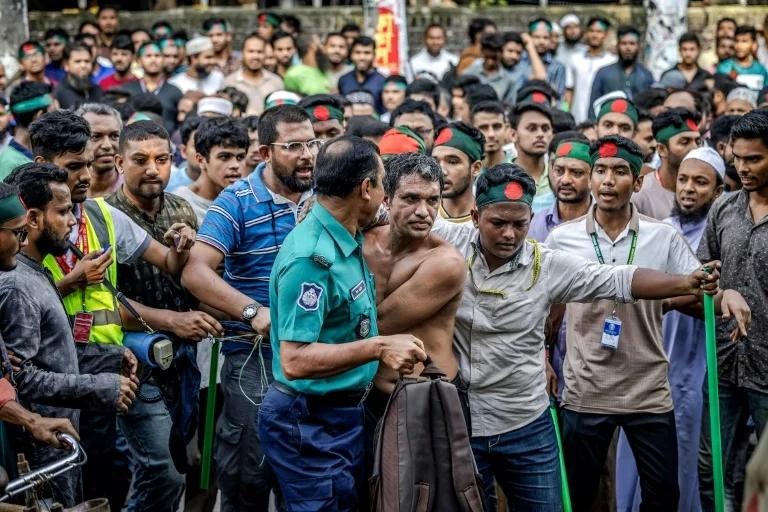
The violent student-led uprising that forced Sheikh Hasina into exile on August 5, 2024, claimed thousands of lives and tore at the fabric of the nation. As the embattled leader fled by helicopter to India, the capital and provinces erupted in chaos. Police, accused of brutal crackdowns on protesters, abandoned their posts, leaving a vacuum quickly filled by mob violence.
In the three days following Hasina’s departure, a wave of revenge swept through the streets. Awami League party members were lynched, government buildings were set ablaze, and communities deemed loyal to the old regime were targeted.
Among the hardest hit were religious minorities. In Panchagarh district, Shahriar’s village became a scene of terror. “Nearly 500 people stormed into Ahmadiyya homes with sticks and hammers,” recalls Mawlana Muhammad Salauddin, a member of the minority Muslim sect. Houses were torched, businesses looted, and terrified families sought refuge in mosques, bushes, or the homes of sympathetic neighbors.
Shahriar was playing outside when the mob descended. What followed left his family shattered. Abdul, fearing retribution, speaks in whispers. “My child hasn’t opened his eyes or spoken,” he says. “I can’t sleep. I can’t eat.”
A Dangerous Indemnity
The hope for justice, for Shahriar and hundreds like him, now seems increasingly remote. In a sweeping move, the new government has granted immunity to protesters for actions taken not only during the revolution but also in the tumultuous three days that followed Hasina’s forced departure.
The October 14 decree, read out by Interior Ministry spokesman Faisal Hasan, described the uprising as “the start of a new journey toward a non-discriminatory Bangladesh” and vowed that participants in the revolution would not face prosecution, arrest, or harassment.
But for Abdul, and countless others, the immunity feels like a betrayal. “Does my son’s suffering not matter? Is our loss invisible?” he asks, tears brimming in his eyes.
Wounds That Won’t Heal
The aftermath of the uprising has left a scarred nation grappling with justice and accountability. Reports from human rights organizations paint a grim picture. Ain o Salish Kendra, a prominent human rights group, documented the deaths of 318 people, including children, between August 5 and August 8. The Bangladesh Hindu, Buddhist, Christian Unity Council (BHBCUC) recorded over 2,000 incidents of violence, including murder and sexual assault, in the weeks surrounding the so-called revolution.
In one particularly harrowing case, a Hindu woman who was raped on August 5 described how her husband had hidden their children to protect them from the mob. “We haven’t sought justice out of fear,” she said, her voice trembling with pain and anger.
Even sites of historical significance were not spared. The museum at the home of Sheikh Mujibur Rahman, Bangladesh’s founding father and Hasina’s father, was reduced to ashes. Witnesses described finding the charred remains of what appeared to be three children outside its ruins.
A Reckoning Ahead
While the new government touts its immunity order as necessary for reconciliation and progress, critics warn it risks entrenching impunity. Human rights lawyer Sara Hossain has called on authorities to clarify their stance, emphasizing that crimes of violence—especially those targeting minorities or carried out in acts of reprisal—cannot be shielded under the guise of revolutionary fervor.
Nirmal Rozario of the BHBCUC echoes these concerns, asserting that justice must be blind to political affiliations. “If the government truly seeks to build a better Bangladesh, it must address each case of violence and hold perpetrators accountable,” he said.
But for Shahriar’s family, these political shifts mean little. Abdul, his voice breaking, says he only wants his son back—alive, whole, and smiling as he once was. For now, he waits, watching the rise and fall of Shahriar’s chest, and holding on to a fragile hope that justice, however delayed, will not be denied.

 The Asiapost News
Leave a comment